Insight · Curved projection
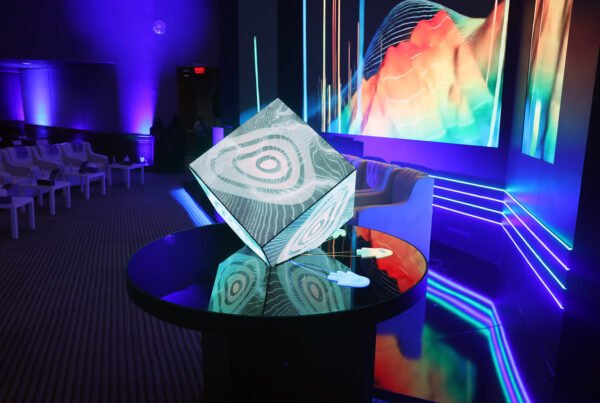
The ballroom ceiling is a plain white dome. At the cue, it opens into a night sky, then folds into the brand mark, then pours down the curved walls in green light. Nothing was built. The room simply changed.
The short version. Flat screens limit the shape of an idea. Projection mapping lets the venue itself become the screen, whatever shape it is.
Why curved surfaces are hard
A projector throws a flat rectangle. Point it at a dome or a column and the image stretches, bends and goes soft at the edges. Projection mapping solves this by working out the real shape of the surface and pre-warping the image so it lands straight from where the audience stands.
Bend the surface below, then switch correction on.
Geometric correction and blending
For large surfaces, several projectors share the job. Geometric correction fits each image to the surface, and edge blending fades the overlaps so the seams disappear. Brightness has to be planned for the room’s ambient light, which is why we test on site before the show.
Where we use it
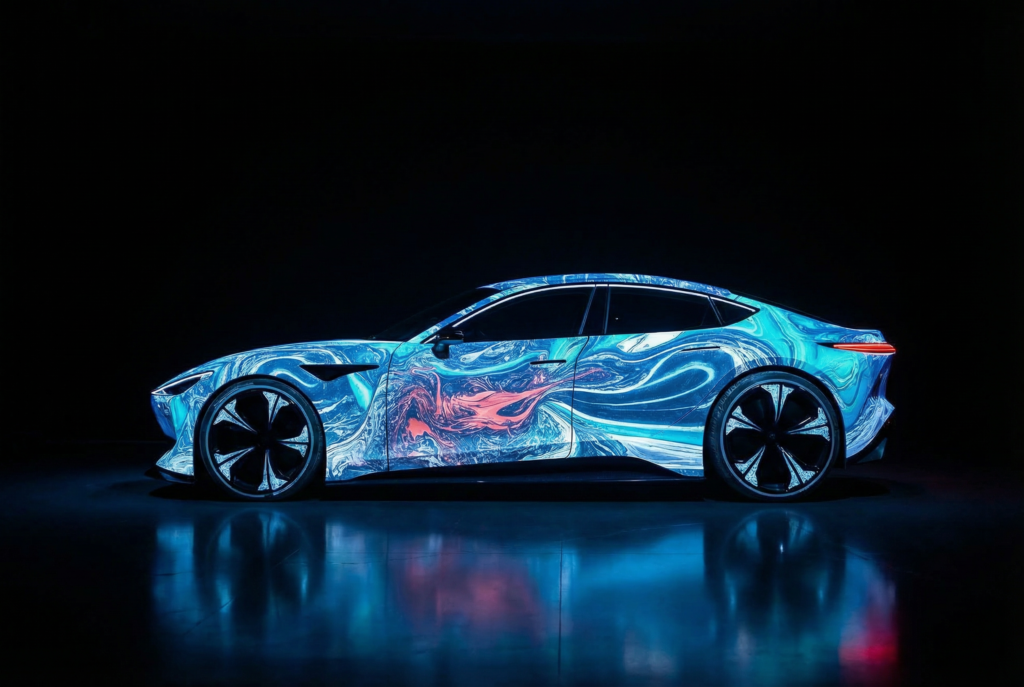
PRISM turns architecture, products and scale models into moving canvases. OPULENCE maps tables, walls and stages for gala evenings, and LUMINA paints laser-projected data onto a site model. For launches, mapping often shares the cue list with the reveal, as in our inauguration and launch experiences work.
Content made for the shape
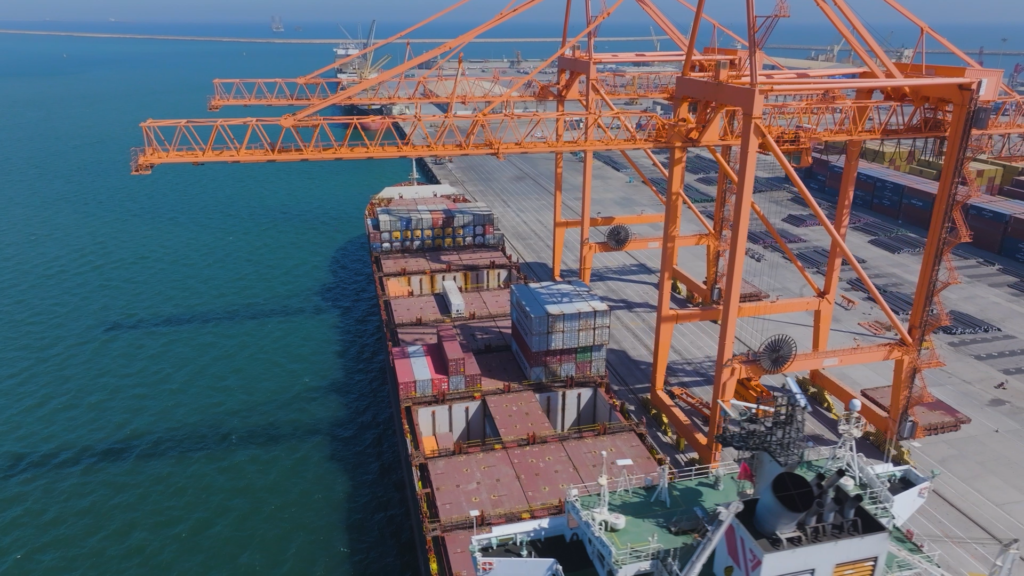
The content has to be designed for the surface, not adapted to it. Our media and content production team builds content against a model of the surface, the same discipline behind our Jubail Commercial Port inauguration film, where every frame was built for the screen and room it would play in.
Mistakes we see
- Adapting flat content to a curved surface at the last minute. Design for the shape from the start.
- Undersized projectors for the room. Ambient light kills contrast faster than any other factor.
- Visible seams between projectors. Edge blending needs time on site to get right.
- Forgetting the audience position. A mapping only looks straight from where people actually stand.
Where it fits
- inauguration and launch experiences
- media and content production
- PRISM: projection mapping
- SANCTUM: immersive 360 degree room
Questions clients ask
Can you map onto a statue or a car?
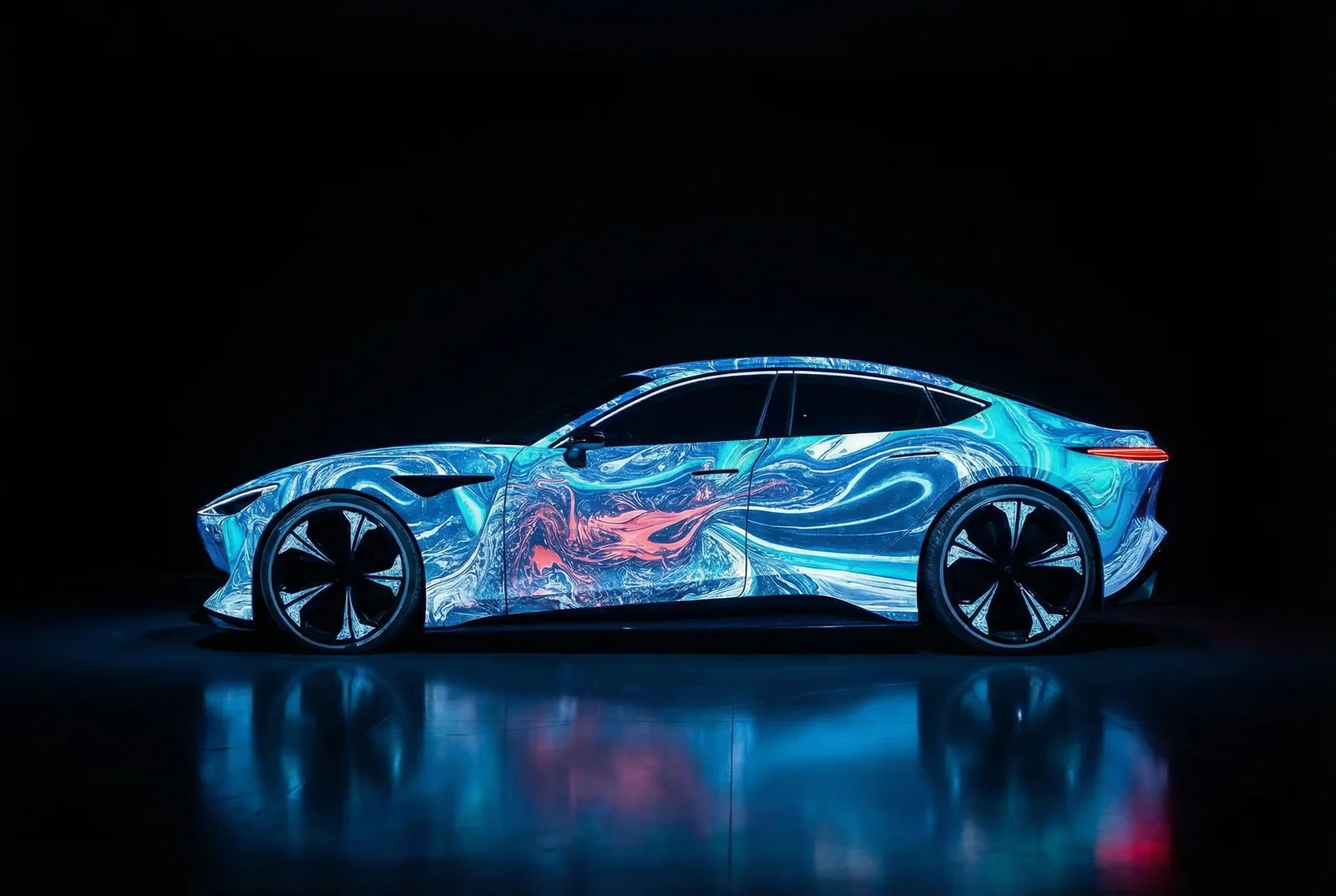
Yes, with an accurate model of the object and projectors positioned for the audience's view.
Does the room need to be dark?
Darker is better. We size projector brightness to the room's ambient light.
How long does a mapping take to set up?
It depends on the surface and the number of projectors. Alignment is done on site before the show.
More insights
- Touch, LED and laser: how an interactive kiosk triggers a laser show
- Movement draws the eye: kinetic installations for brand activations
- Smaller rooms, better deals: micro-events and invite-only workshops at trade shows
- The agenda that knows you: personalised event journeys in real time
- Keep the room: why mixed reality suits corporate events better than full VR
- How a cylindrical hologram works: from CAD file to exhibition floor
- Lead capture on a stand: the architecture behind 217 qualified leads
Start with a conversation
Tell us the event, the venue and what people should walk away remembering. Launch experiences WhatsApp FAIM
Joby Thuruthel / FAIM
Found this useful?