Insight · Mixed reality
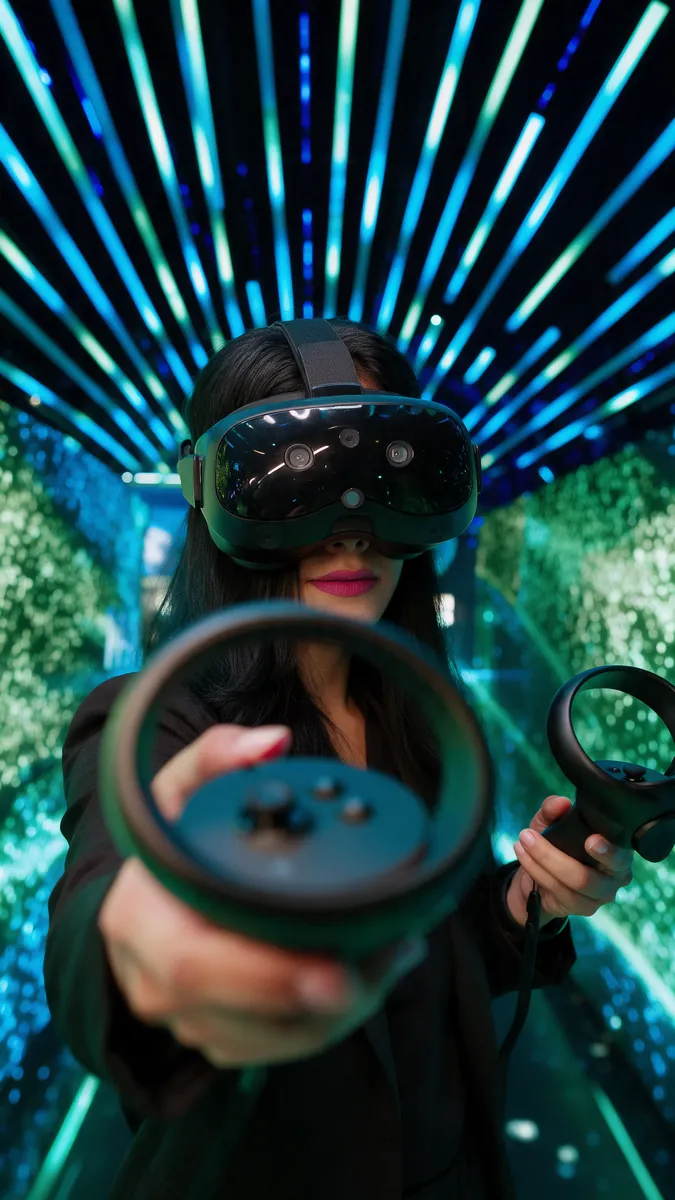
Fifty senior engineers put on headsets for a keynote and the room goes silent in the wrong way. Nobody can see the speaker, nobody can catch a colleague’s eye, and the most expensive people in the company are sitting alone together.
The short version. Virtual reality is brilliant at taking someone somewhere else. Mixed reality is better when the point is to stay together and look at the same thing.
What VR does well
We build VR when isolation is the feature. In the VR safety training for Tasnee, employees stood on a virtual platform at height, inspected a harness and made decisions with real consequences, all without leaving the training hall. More than 200 participants completed it. At the Aramco TeraPOWERS event, VR journeys took visitors inside the reservoir. Both worked because the room was not the point.

Where VR breaks a corporate event
A keynote, a board briefing or a product reveal is about shared attention. The moment everyone is inside their own headset, the speaker loses the room and the room loses each other. Mixed reality solves that by adding to the room instead of replacing it. The model floats in the middle of the table, the speaker is still visible, and people can point at things and nod at each other.
How passthrough works
Modern headsets show the real room through cameras and draw digital objects on top. The headset maps the space as you move, so a model stays anchored to the table rather than following your face. That mapping is what makes a shared object possible: two people can walk around the same machine and see it from their own side.
Slide the control below to see where mixed reality ends and full VR begins.
A bridge we already use
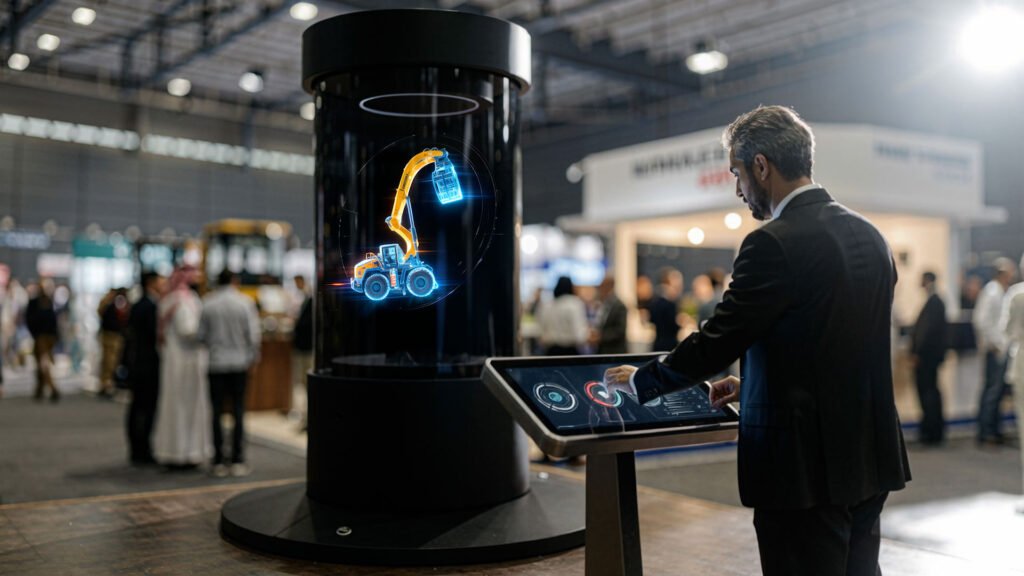
Not every event needs a headset at all. Our interactive hologram at HEC Dhahran Expo gave engineers a life-size, glass-free 3D view of 30-tonne machinery that a whole group could stand around together. Hologram columns, PORTAL experiences and AETHER phone-based AR all keep the room shared.
Choosing the format
Our rule of thumb: if the goal is training, empathy or a journey somewhere else, choose VR. If the goal is a shared decision or a presentation, choose mixed reality or a glass-free display. Our immersive AR and VR experiences page sets out the formats we build.
Mistakes we see
- Putting a whole audience in headsets for a talk that needed eye contact.
- Building a beautiful model nobody can interact with. If people cannot point, walk around or pull it apart, a screen would have done.
- Ignoring the light. Bright halls wash out passthrough and holograms alike, so we test in the real venue before the day.
- Sessions that run too long. Shared mixed reality works best in short, purposeful moments.
Where it fits
- immersive AR and VR experiences
- holographic displays
- ELYSIUM: bespoke VR journeys
- AETHER: markerless AR on visitors’ phones
Questions clients ask
Is mixed reality ready for a large audience?
For small groups around a model, yes. For hundreds of people at once, a hologram or an LED reveal is usually more practical.
Can the same content run in VR and mixed reality?
Often yes. We build the 3D assets once and decide per session how much of the room to keep.
Do people get motion sickness?
Less in mixed reality, because the real room stays visible. We still design for short sessions.
More insights
- Points for saying hello: how leaderboards make networking easier
- Ship the hologram, not the machine: interactive product demos on the show floor
- Walk the floor before the truss goes up: digital twins for event planning
- Light, sound and scent: designing zones people remember
- How a cylindrical hologram works: from CAD file to exhibition floor
- Lead capture on a stand: the architecture behind 217 qualified leads
Start with a conversation
Tell us the event, the venue and what people should walk away remembering. AR and VR experiences WhatsApp FAIM
Joby Thuruthel / FAIM
Found this useful?