Insight · Gamified networking
Coffee break, day one. Two hundred people, most of whom know nobody. They hold their cups like shields and stare at their phones. Then someone notices the screen by the bar: a leaderboard, and a prize for whoever meets the most new people before lunch.
The short version. The cold approach is the hardest part of networking. A light game gives everyone the same excuse to start.
Reward connection, not competition
The trap with gamified networking is building a scoreboard that rewards the loudest person in the room. We score what the organiser actually wants: new conversations, visits to activations, questions asked in sessions. Nobody loses points, and the board celebrates the top connectors rather than shaming everyone else.
A tap, not a form
The mechanic has to be faster than small talk. Two guests touch badges, both get the points, and both get each other’s contact details if they agreed at registration. The same consent-first capture runs on our VAULT lead systems.
Earn some points below and watch the board move.
Live scoring we have built before
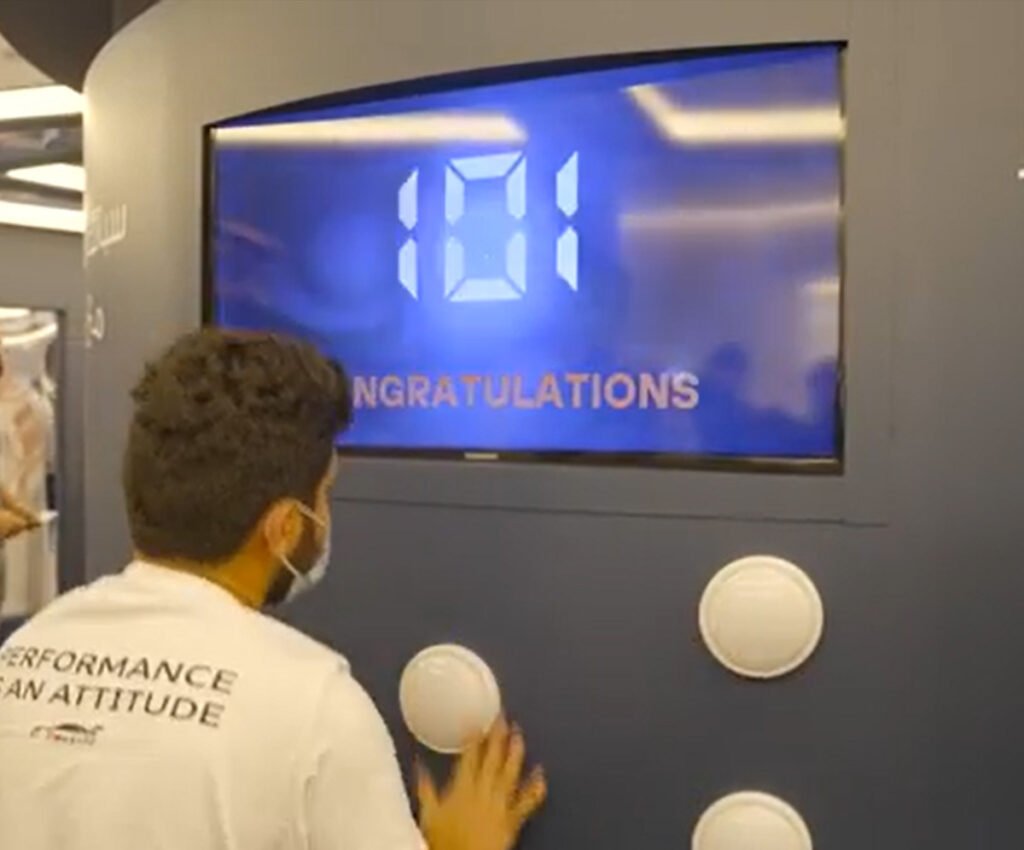
Live leaderboards are something we have built on real floors. Our reaction game for Al Salam Bank put a live score and countdown on a dedicated screen so the queue could watch, and the next player stepped up before the current one finished. The same scoring backbone logged decision accuracy for more than 200 participants in our VR safety training for Tasnee.
Put the board where people gather
A leaderboard nobody sees does nothing. We place it where people already queue: the coffee bar, the registration area, the entrance to the main hall. On a large stand it can live on the main wall, driven from one content panel as described in our post on multiscreen sync.

The prize matters less than you think
A VIP lounge invitation or early access to a session works better than an expensive gadget, because it creates another reason to meet people. The real reward is that by lunch, a room full of strangers has become a room full of conversations.
Mistakes we see
- Rewarding the same five people all day. Reset the board per session so newcomers can still reach the top.
- Making the check-in slower than a handshake. If it takes longer than a tap, people stop doing it.
- Hiding the board in a corner. The screen belongs where people already wait.
- Turning it into a hard sell. Points for visiting stands work only when the stands are worth the visit.
Where it fits
- interactive games and audience engagement
- VOYAGE: a point-based QR journey
- PULSE: live audience votes and battles
- VAULT: consent-first data capture
Questions clients ask
Do guests have to share their details to play?
No. Contact exchange is opt-in at registration. Guests who opt out still earn points for visits and sessions.
Does the leaderboard need internet?
No. Scoring runs on the venue network and syncs when a connection is available.
Can it run across a multi-day event?
Yes. Boards can reset per session or run across the whole show.
More insights
- Don’t read it, play it: inside the FAIM JARVIS Experience Library
- Ship the hologram, not the machine: interactive product demos on the show floor
- Walk the floor before the truss goes up: digital twins for event planning
- Light, sound and scent: designing zones people remember
- Out of the seat: turning passive attendees into active participants
- How a cylindrical hologram works: from CAD file to exhibition floor
- Lead capture on a stand: the architecture behind 217 qualified leads
Start with a conversation
Tell us the event, the venue and what people should walk away remembering. Games and engagement WhatsApp FAIM
Joby Thuruthel / FAIM
Found this useful?