Insight · Personalised journeys
It is 10:12 on the second morning. A procurement manager stands in the main hall holding a printed agenda with forty sessions on it, and she has already missed the one she flew in for because it moved rooms overnight. Her badge knew. The paper did not.
The short version. An event that knows what each guest came for can stop asking them to read a timetable. The job of the technology is to remove the hunting, not to add another screen.
Start at the front desk
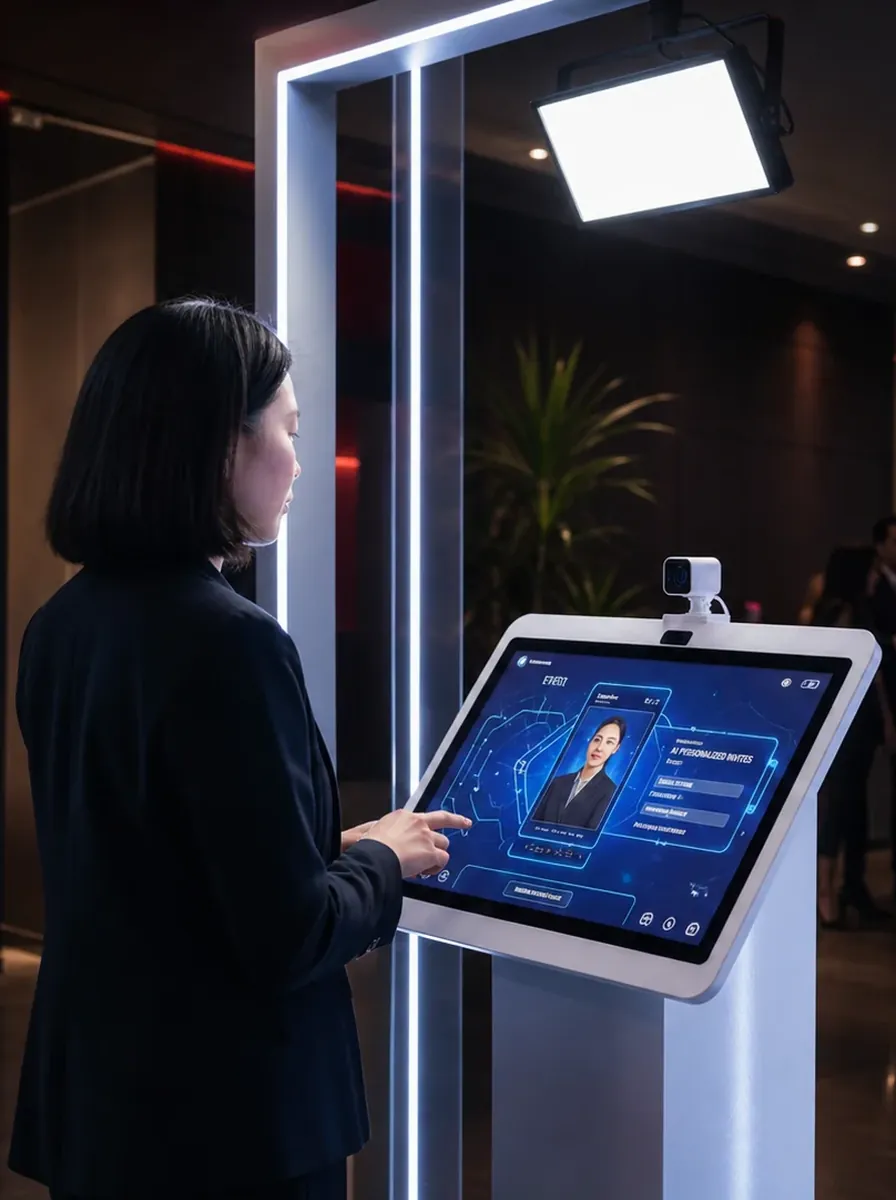
Personalisation begins before anyone enters the hall. At registration, a guest tells us three things: what they came to learn, who they want to meet and how long they are staying. Our reception and registration desk captures that in under a minute, prints the badge and writes a small interest profile that stays on the venue network.

The same check-in flow runs on CONCIERGE, and you can try it in the live CONCIERGE demo.
An agenda that re-ranks itself
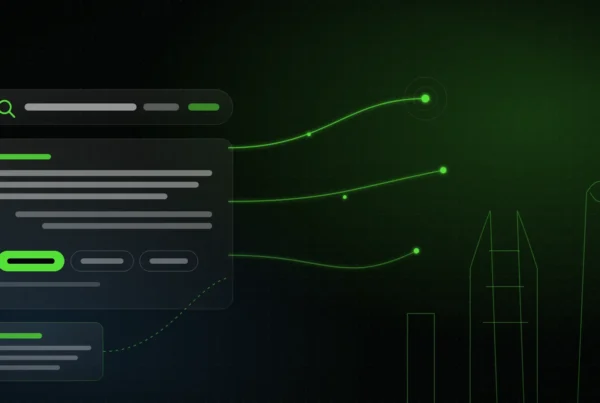
Once the profile exists, the agenda stops being a list and becomes a ranking. Sessions that match the guest’s interests rise. Sessions in rooms they cannot reach in time drop. When a speaker overruns or a room changes, the ranking updates for everyone affected, not just for the people who happen to look at the board.
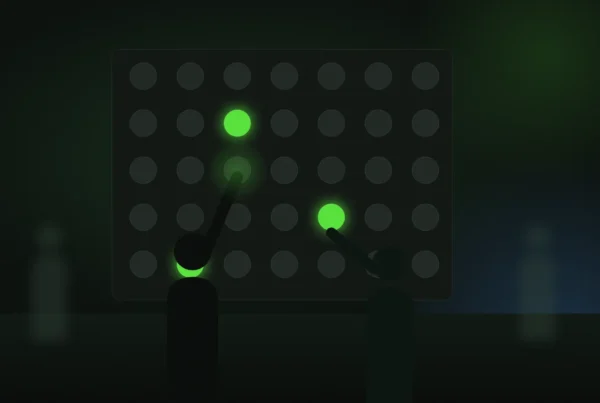
Try it below. Pick what you came for and watch the next three sessions reorder.
The nudge, not the nag
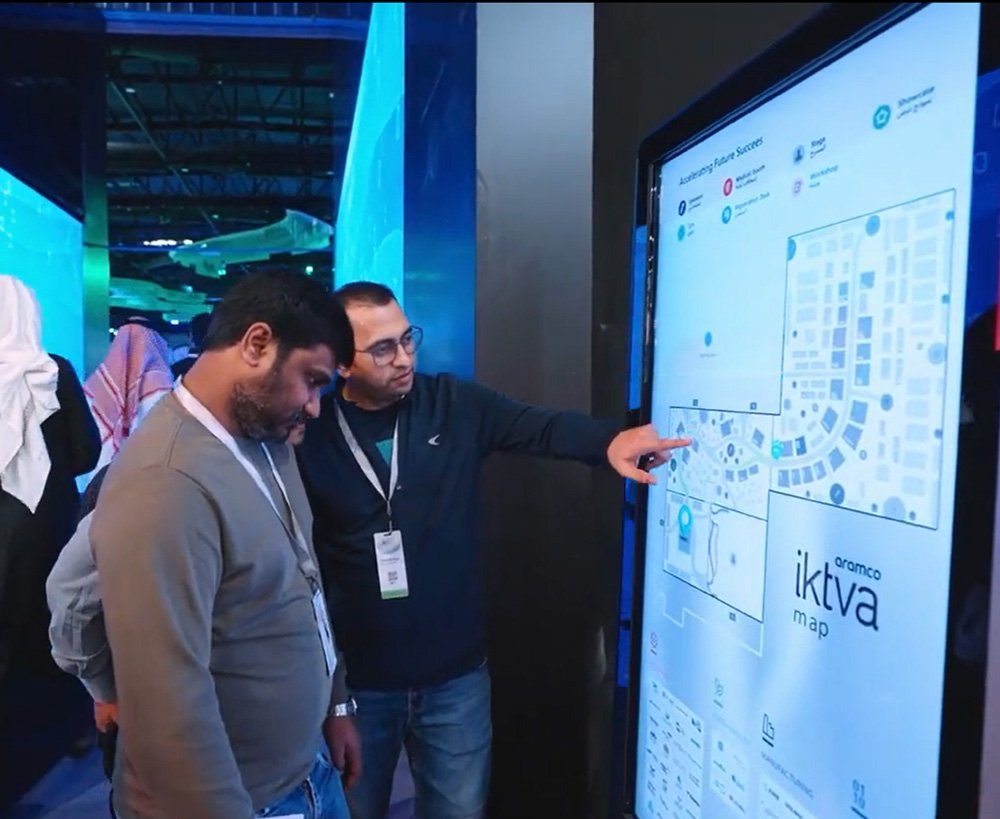
The best version of this is quiet. A badge or phone pushes one suggestion when the guest is within walking distance of something relevant, and nothing else. We learned the value of restraint on the wayfinder at Aramco iktva, where every screen worked as a guide rather than an advert, and visitors spent less time lost and more time in the conversations that mattered.
Where the data lives
Personal data is where most event apps go wrong. Our rule is simple: the profile is captured with consent on screen, it is used on the venue network, and it is handed to the organiser at close. Nothing is sold, and the hardware is wiped after handover. The architecture behind that is the same one in our post on lead capture on a stand.
What we would measure
Three numbers tell you whether personalisation is working: how many guests acted on a suggestion, how many sessions ran closer to capacity, and how many people left the hall without attending anything. We set those up as reporting from day one, so the organiser sees the effect rather than taking our word for it.
Mistakes we see
- Asking twenty questions at registration. Three good ones beat a form nobody finishes.
- Pushing a notification for every session. One timely suggestion is useful, five is spam, and the guest turns them off.
- Hiding the logic. Guests trust a suggestion more when it says why: you picked Safety, this talk starts in six minutes next door.
- Forgetting the people with no phone signal. The badge and the venue totems have to carry the same information.
Where it fits
- smart event technology
- reception and registration desk
- IMPERIUM: registration, flow and reporting
- COMMIT: the event software backbone
Questions clients ask
Does personalisation need an app download?
No. It can run on the badge, on venue totems and through a web page opened from a QR code. An app is optional.
Who owns the attendee data?
The organiser. FAIM captures it with consent on screen and hands it over at close.
Can it run in Arabic?
Yes. Bilingual Arabic and English delivery is standard across our interactive applications.
More insights
- Keep the room: why mixed reality suits corporate events better than full VR
- Points for saying hello: how leaderboards make networking easier
- Ship the hologram, not the machine: interactive product demos on the show floor
- Walk the floor before the truss goes up: digital twins for event planning
- How a cylindrical hologram works: from CAD file to exhibition floor
- Lead capture on a stand: the architecture behind 217 qualified leads
Start with a conversation
Tell us the event, the venue and what people should walk away remembering. Smart event technology WhatsApp FAIM
Joby Thuruthel / FAIM
Found this useful?