Insight · The psychology of play
A senior director in a dark suit walks past the game wall twice. On the third pass he takes his jacket off, hands it to a colleague and steps up. Sixty seconds later he is laughing, demanding a rematch, and talking to the stand team about their product.
The short version. Play gives adults permission to drop their guard for a minute. That minute is where the real conversation starts.
Permission to play
Most corporate settings reward looking composed. A game reverses that for a moment, and the shared laugh after a near miss breaks the ice faster than any opening line. The trick is a mechanic simple enough to understand from across the hall, so nobody feels foolish stepping up.
The second try
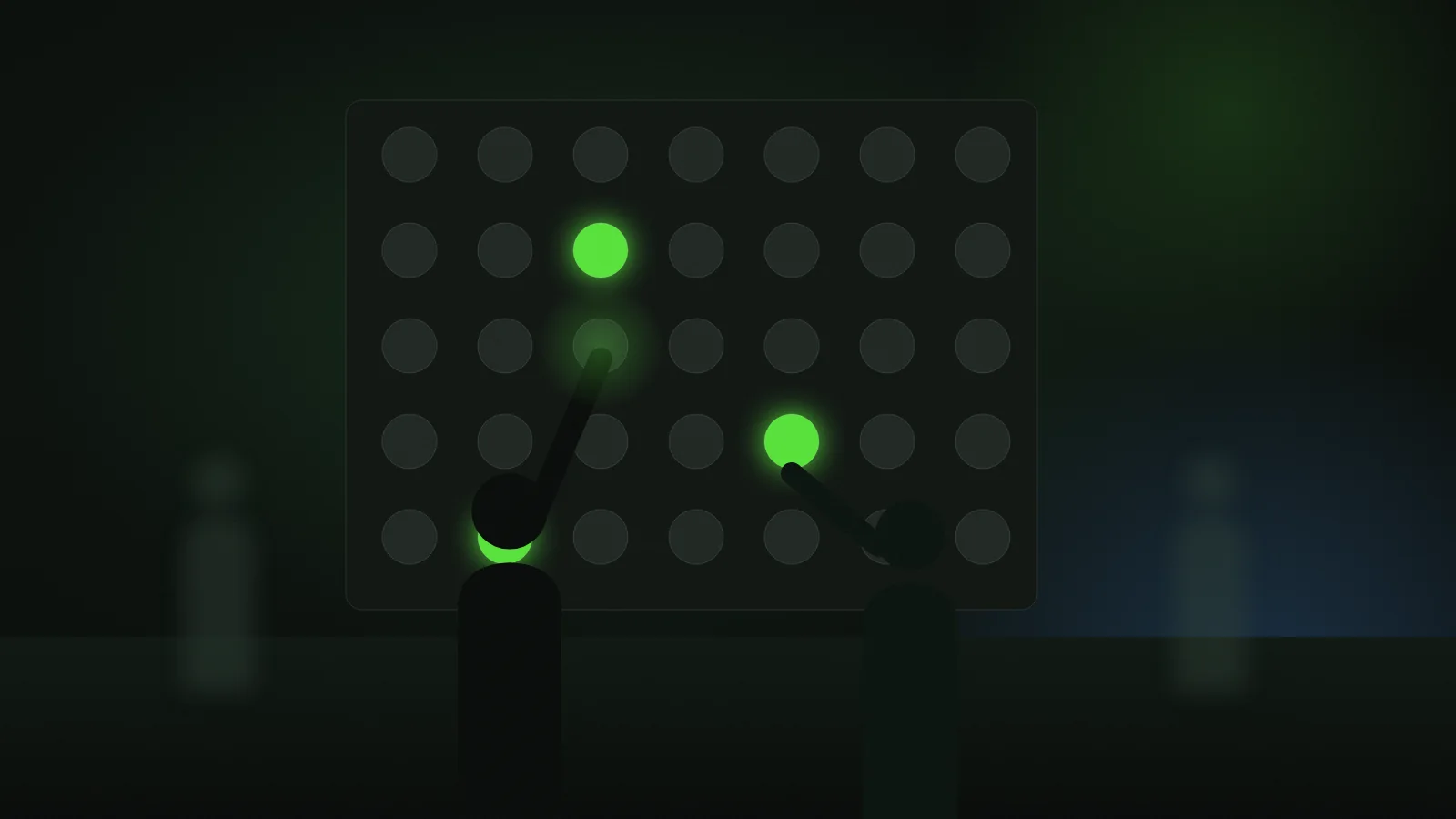
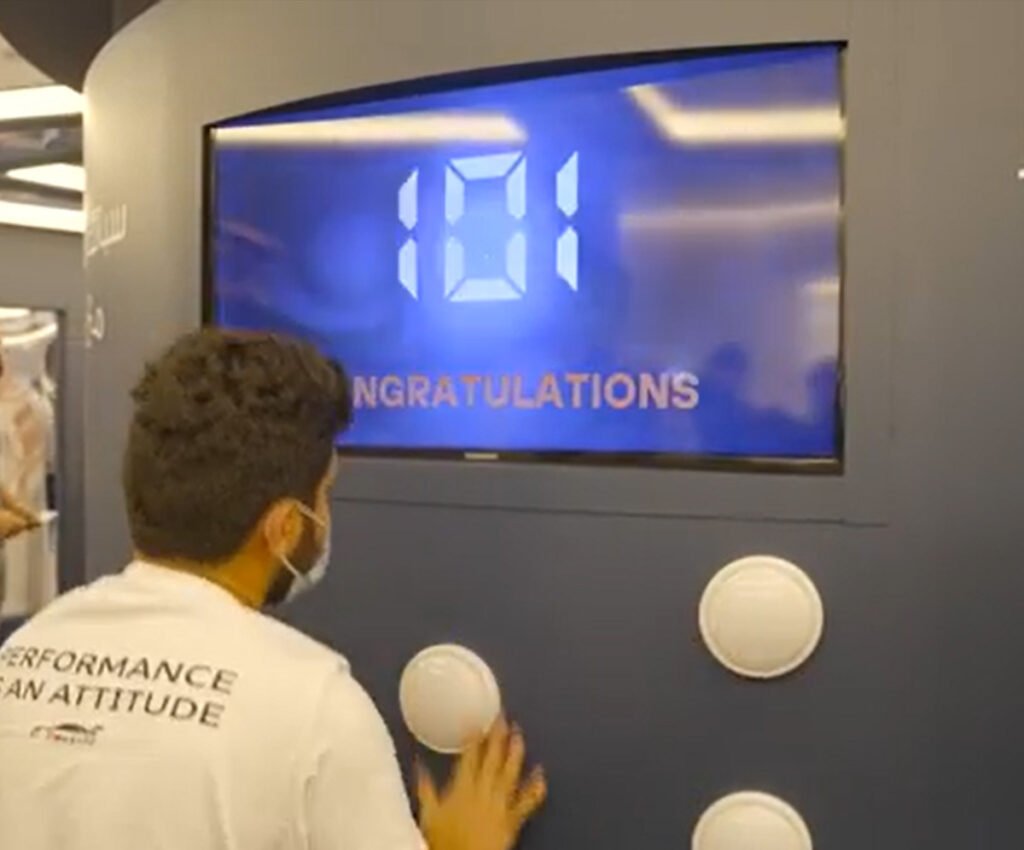
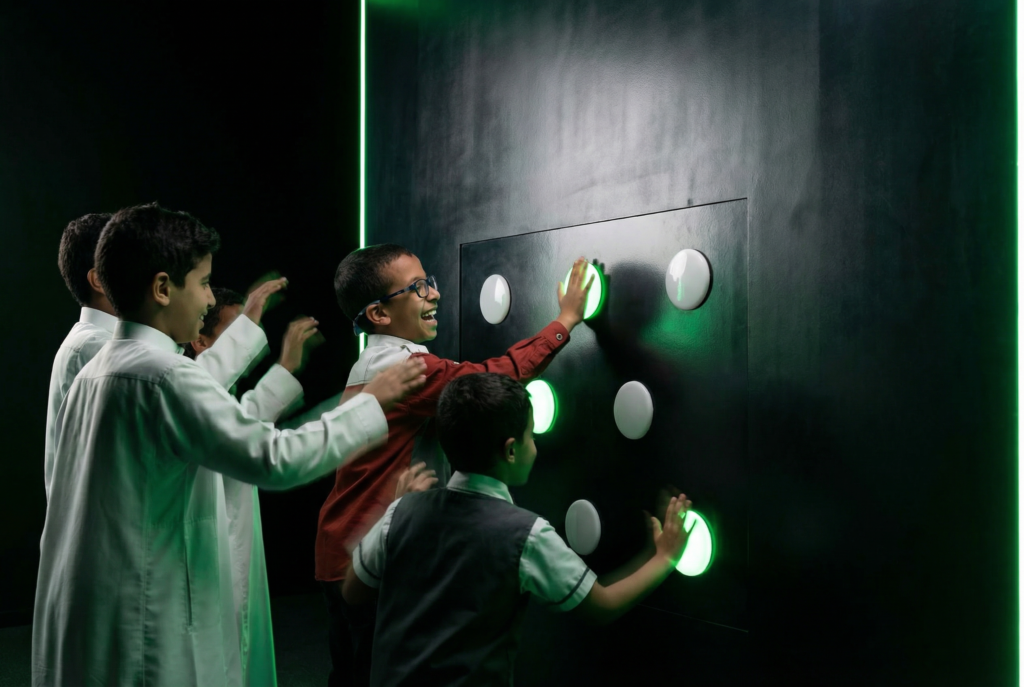
The single most important design decision is difficulty. Too easy and the score means nothing. Too hard and people stop after one go. In our reaction game for Al Salam Bank, we tuned the light sequence until a first-time player scored in the middle and a second try visibly improved. That improvement is what makes people queue again.
Try it yourself below.
Watching is half the game
The people waiting are the audience, and the score screen is for them. A visible countdown and a live score turn a single player into a small show, and a small show draws a crowd to the stand.
Play that teaches
Games can carry serious messages. CITADEL teaches cybersecurity awareness through competition, and our VR safety training for Tasnee scored real safety decisions. The full engineering of the reaction game is in our post on building a physical reaction game.
Mistakes we see
- Games that take five minutes to explain. If it is not obvious from across the aisle, the queue never forms.
- Difficulty set by the build team. Engineers who played it a hundred times are not your first-time visitor.
- No visible score. Without an audience, a game is just one person pressing buttons.
- A logo on an off-the-shelf machine. The brand message should live inside the mechanic.
Where it fits
- interactive games and audience engagement
- reaction game for Al Salam Bank
- GLADIATOR: the light-strike reaction wall
- TITAN: boxing-pad challenge
Questions clients ask
Will senior guests really play?
In our experience, yes, once the mechanic is simple and the first player has broken the ice.
Can a game carry our product message?
Yes. The targets, messages between rounds and celebration screens are built to your brief.
How many plays can one station handle?
With one-minute plays and a short reset, well over a hundred plays an hour at peak.
More insights
- Don’t read it, play it: inside the FAIM JARVIS Experience Library
- Mirror, mirror: digital installations that turn guests into art
- Pixels on a building: when retro games meet projection mapping
- Less conference, more festival: corporate events without the rows of chairs
- The right handshake: how smart matchmaking connects attendees
- How a cylindrical hologram works: from CAD file to exhibition floor
- Lead capture on a stand: the architecture behind 217 qualified leads
Start with a conversation
Tell us the event, the venue and what people should walk away remembering. Games and engagement WhatsApp FAIM
Joby Thuruthel / FAIM
Found this useful?