A ten-week Riyadh Season activation rarely fails in one dramatic moment. It wears down through heat, dust, worn touch frames, bored regulars and rotating staff, and each one can be planned for before opening night.
The brief came in on a Sunday, five weeks before the season opened. A marketing team from Riyadh had secured a spot for their brand inside one of the Riyadh Season zones, and they wanted families to queue for it.
Their wish list fitted on a phone screen. A game children could play with their whole body. A leaderboard. Arabic and English. Bright enough to be seen from the walkway.
The last line was the one I read three times. The stand had to run every night until the season ended.
Riyadh Season 2026 opened on 21 October, with the General Entertainment Authority announcing ten weeks of programming across zones including Boulevard World and Boulevard City. That is a generous window for a brand. For the kit on a stand, it is a long run, half outdoors, in front of a crowd that changes every evening.
At a three-day exhibition, most failures are loud. The power drops or the network dies, and everyone knows within seconds. We have written about that kind of night before, in the story of a National Day mall activation that kept going when the lights went out.
A season activation fails differently. It wears down, one small fault at a time, until night forty looks tired and nobody can say when it started.
The question nobody had asked
The team had already spoken to two suppliers. Both had sent lovely renders. Neither had asked what the stand would look like in week seven.
So that was where we started. Who restarts it at eleven at night if something freezes, and how do you keep a family interested when they come back for the fourth Friday in a row?
The marketing lead admitted nobody had raised any of this. They had been planning an opening night. We were planning for every night after it.
What we built was easy to explain. Players steer a little desert buggy in the brand’s colours by leaning and jumping in front of a wide LED screen. Two cameras track them, so if one fails the play area shrinks a little and the game carries on. A touchscreen kiosk beside the screen takes a first name and shows the leaderboard. Everything runs on machines inside the stand, offline first, the way we build event applications that have to survive venue networks.
None of that was unusual for us. The decisions that mattered came later in the planning, and they were dull ones.
The test machine that updated itself
Two weeks before load-in, we left the full game running overnight in our workshop. Soak tests are boring. They are supposed to be.
At about four in the morning, the game PC decided it was time for a system update. It closed the game, installed something, restarted and sat on a login screen until the team arrived.
On a Thursday night in a busy zone, that would have meant a black LED wall and a promoter with no idea what to do.
Updates were frozen on every machine for the season. We would apply patches ourselves, on our own schedule, on a test unit first. The PCs were set to boot straight into the game after any restart, with no login and no desktop showing. We ran the soak test again for three nights, and it held.
Weeks one and two: heat, then dust
The stand faced west. In the afternoons, before the zone opened, the sun sat on the kiosk cabinet for hours.
On the third day, our pre-opening check showed the game PC already running hot, and a test round stuttered for a few seconds. Children feel that instantly. A buggy that lags behind your body feels broken, even if the delay is tiny.
We added ventilation and a temperature log, and asked the brand’s site team to keep a reflective cover on the cabinet until an hour before doors. Opening was smooth after that.
Then, in the second week, a dusty wind came through the city for an afternoon.
By evening there was a fine film on everything. On the camera windows it was just enough to soften the tracking, so tall players at the edge of the play zone kept dropping out for a moment. The cabinet intake filters had turned into grey felt.
Nothing clever fixed it. Our team cleaned the camera glass, swapped in the spare filters we had packed, and wrote both jobs into the daily opening routine, with a photo of each clean lens posted to the project group before doors.
Week three: ghost taps on the kiosk
Around week three, the morning test on the leaderboard kiosk picked up taps nobody had made. A name would gain an extra letter. A menu would open by itself.
The screen was fine. The touch frame around it was not. Thousands of hands, plenty of hand sanitiser and a little more dust had left a thin film along the edge of the glass, and the frame was reading it as a finger. It is a classic long-run fault, and you will almost never see it at a three-day show.
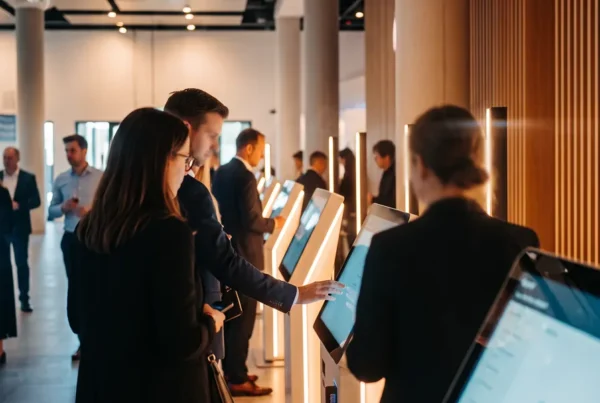
We cleaned and recalibrated the frame, added the edges of the glass to the daily routine, and moved the most used buttons up from the bottom edge, where the film built up fastest. There is more on how we think about public screens in our piece on designing touchscreens for exhibition floors.
Week four: the regulars
This one was not a technical fault at all. It worried the brand more than the dust did.
Families come back to Riyadh Season, some of them every weekend. By week four, our nightly logs showed the same handful of names holding the top of the all-time board. New players walked up, looked at those scores and walked off again.
So we split the leaderboard. A nightly board reset at closing, giving every evening its own winner, with a weekly board running beside it. The all-time scores moved off the big screen and onto the kiosk.
We also switched on a weekend course, a different track layout that only appears on Thursday and Friday nights. Returning families had something new to learn. We had sketched it in the first week of design, so finishing it took days, not a rebuild.
Week six: a new promoter and a frozen screen
Promoter teams rotate on long activations. That is normal.
In week six, a new promoter started on a Friday. An hour into her shift, she pressed the wrong corner of an admin menu and the leaderboard froze. She did what anyone would do and started trying things. The queue grew.
A member of FAIM commissions and stands by every installation we deliver, and on this one that meant someone from our team in Saudi Arabia close by every night. He was at the stand within minutes. The fix itself took seconds.
Making sure it could not happen the same way twice took longer. The admin menu went behind a gesture only staff knew. We wrote a one-page card in Arabic and English: if the screen freezes, do this; if the game will not start, do that; if neither works, call this number. It was taped inside the cabinet door, and every new promoter was walked through it on their first night.
The late change in week seven
In week seven, with the season past its midpoint, the brand launched a new product colour and wanted it in the game by the next weekend.
Late changes on a stand that has run happily for weeks make me nervous. You are replacing the version everyone trusts.
We built the new version on a duplicate machine in our workshop and tested it there, while the old one kept running on site, untouched. The swap happened in the morning before the zone opened. The previous version stayed on the machine, ready to restore in minutes. Arabic and English text were updated together from one file, so neither language ran a day behind.
It went in on a Wednesday. On Thursday night, a boy in the queue pointed at the new buggy and told his father that one was his.
The final night
Closing night looked almost exactly like opening night. The wall was bright and the leaderboard full, and a group of cousins were arguing about who had been fastest, with the youngest sure he had been cheated.
Between those two nights sat weeks of small, unglamorous work: clean lenses, fresh filters, a card taped inside a cabinet door and a case of spares that mostly stayed shut. The brand team saw very little of it. They spent the season thinking about their product and their customers, and the touch frames stayed our problem.
This story is a composite drawn from common situations we see on long-running activations, not a single client project.
Buyer checklist for a season-long activation
- Ask for an overnight soak test before load-in, and ask what stops the machines updating themselves mid-season.
- Confirm the experience boots straight back into the game after any power loss, with no login screen.
- Agree a daily opening routine covering camera lenses, touch frames and cabinet filters, with proof that it was done.
- Check how the cabinet copes with afternoon sun while the stand is closed.
- Plan for repeat visitors with nightly and weekly leaderboards, and content that changes during the run.
- Give promoters a bilingual one-page recovery card, and hide anything they should not press.
- Agree how mid-season content changes are tested and how quickly the old version can come back.
- Find out who is on call, where they are based and which spares they carry.
- Collect only the visitor data you need. A first name on a leaderboard is very different from a phone number, and Saudi Arabia’s Personal Data Protection Law expects opt-in consent before personal data is used for direct marketing.
Planning for the rest of the season?
Our interactive stand builds typically take four to six weeks, and even the fastest need five to ten working days from approval and advance payment. If you are planning something for a Riyadh Season zone, a long mall run or another public activation in Saudi Arabia or Bahrain, we are happy to talk through the risks before anything is built.
About the author: Joby Thuruthel is a Creative Technologist at FAIM Digital W.L.L in Bahrain. Follow his work on Instagram.
Sources
- Gulf News: Riyadh Season 2026 to begin on October 21 with 10 weeks of entertainment
- TradeArabia: Riyadh Season 2026 to open on October 21
- CMS: One year anniversary of the Saudi Personal Data Protection Law (SDAIA oversight, full enforcement from 14 September 2024, opt-in consent for direct marketing)
Found this useful?