Modern tools have made the first version of a product quick to build. Getting it to the people who need it still takes listening, selling and the nerve to keep going.
A few years ago, a working prototype meant a team and a budget. Now I can open a laptop on a Thursday evening and have something clickable by Saturday. A booking page, say, or a small assistant that answers questions.
It still surprises me how fast that has become.
This week I watched a couple of Malayalam vlogs about business and mindset, and they stayed with me for days.
Thank you both. This post grew out of what you said.
One of them quoted Naval Ravikant, and I wrote the line down.
Learn to sell, learn to build. If you can do both, you will be unstoppable.
I have worked in cinema, then in agencies, and now in technology. I think the line carries more weight today than when he said it, because one half of it has become so much easier.
Building is no longer the hard part
With today’s tools, one person can put together a first version of an app, a website, an assistant or an interactive experience in very little time. It won’t be finished. It may not survive its first real users. But it exists, and five years ago getting that far would have taken months.
So if almost anyone can build a first version, what separates the ideas that grow from the ones that stall?
The demo that sits in a folder
The vlog described a pattern I have seen many times. A founder builds something they believe could change their market. You ask what happens next. They pause, then admit they don’t really know how to sell it.
Six months later the demo still works perfectly. It is sitting in a folder, and nobody has bought it.
In most of those cases the product was never the problem. Nobody took it to the people who needed it, in words those people actually use, often enough for them to remember it.

Selling starts with listening
“Selling” sounds like pressure and a pitch deck. The useful kind starts much earlier and much more quietly. You sit with someone and let them tell you what is slowing them down.
A shop owner mentions the stock count he redoes every Friday. An events manager mentions the guest list that arrives in three different formats. You aren’t pitching yet. You are finding out what is worth fixing, and how they would describe it to a colleague.
The order that works for me looks roughly like this.
- Notice a problemSomething people repeat, complain about or quietly work around.
- Talk to the people who have itAsk how they handle it today and what it costs them.
- Build the smallest versionEnough for someone to react to. Rough is fine.
- Show it earlyIn front of the right person, before it feels ready.
- Learn and adjustKeep what made sense to them. Drop what didn’t.
None of these steps promises a sale. They make it much less likely you spend six months on the wrong thing.
Three things the ones who last have in common
The second vlog listed three qualities. I have seen each of them in the best founders I’ve worked with, though rarely all on the same day.
1. A mind that doesn’t break
Some weeks bring no orders and nothing in the account. The people who keep going still get up the next morning and try one more thing. That takes more than luck. They decide to carry on, again each day, often while they are worried.
It doesn’t mean pretending everything is fine. It means looking at the facts, choosing the next step and taking it.
2. If there’s no way, they make one
No money, so they work out how to raise some, or they start smaller. No team, so they find one person who can help. No experience, so they learn, or ask someone who has done it before.
Everyone hits walls. What differs is the first reaction, whether someone goes looking for a fix or for an excuse.
3. Faith that failure is teaching you something
A proposal nobody answers stings. So does a demo that leaves people confused. Each one also holds information, if you look at it with a clear head. Was it the wrong audience, or a good idea explained badly?
A setback only teaches you something when you stop and write the lesson down. Then it stops pushing you back and starts getting you ready for the next try.
Creativity is less a gift than a way of seeing. It is noticing what other people walk past, and a lot of business opportunities are hiding right there.
How I’d use this in daily life
- Start small. One step a day beats a perfect plan that never begins.
- Swap “I can’t” for “How could I?” The first question ends the conversation. The second one opens it up.
- Write down one lesson from every setback. Keep it concrete. “The people we spoke to didn’t understand the offer” helps far more than “sales are hard”. A month later you have a notebook of experience.
- Notice friction around you. Pay attention to what frustrates people at work or in the queue at the bank. Some of those frustrations are problems waiting for someone to solve them. Ask a few questions before you decide which ones.
How I’d use this in business
Learn to sell, or partner with someone who can. Selling skills for founders can be learned like any other skill. If selling doesn’t come naturally, learn the basics anyway and think about a co-founder or a hire who enjoys customer conversations. You still need to understand why people say yes and why they walk away. A great product nobody sees is just a hobby.
Talk to customers before you build. Selling starts with listening. Find out what they would pay to fix, then build that. These are the questions I keep coming back to.
How do you handle this today?
- Why ask it
- It shows you the real workaround, which is what your product has to beat.
What does it cost you when it goes wrong?
- Why ask it
- Time, money or reputation. If the answer is “not much”, the problem may not be urgent.
What have you already tried?
- Why ask it
- Past attempts tell you what disappointed them and what they will be wary of.
Who else would need to agree?
- Why ask it
- The person with the problem is not always the person who signs off the budget.
Try not to lead people towards the answer you are hoping for. Listen for patterns across several conversations, not one enthusiastic reply.
Let technology do the heavy lifting. AI tools and automation are good at repetitive work such as drafts, summaries, data entry and follow-up reminders. Give them that work, so your energy goes into relationships and decisions. They won’t replace trust or judgement, and they shouldn’t.
Show progress early. A simple demo in front of the right person teaches you more than months of polishing in private. Say clearly what is a test and what is ready. People give better feedback when they know which one they are looking at.
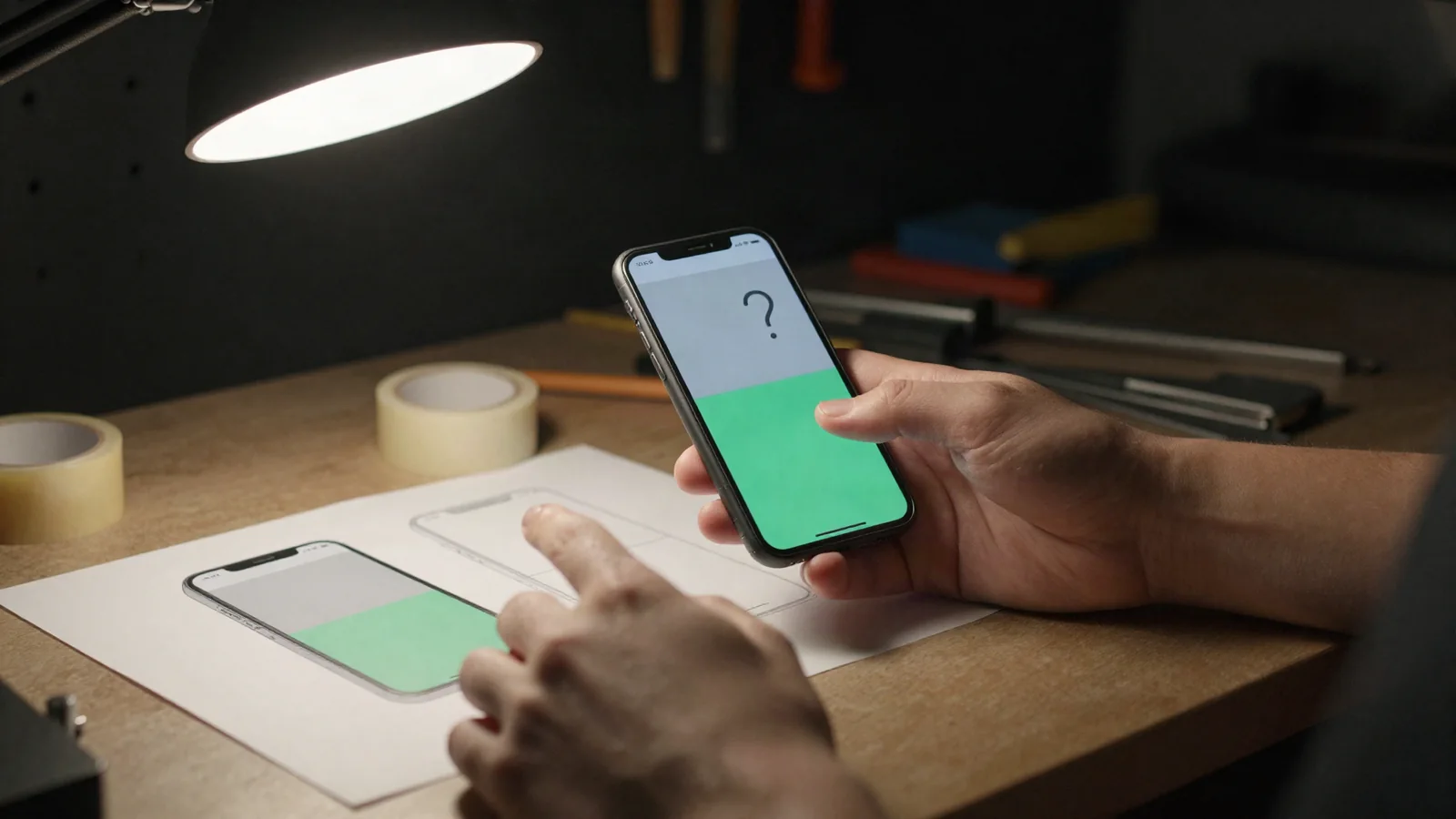
Once you start showing work early, it turns into a loop. Each pass is smaller and faster than the last.
Why I’m sharing this
Knowledge grows when you share it. I’ve been lucky to learn from filmmakers, technologists and clients across Bahrain and Saudi Arabia, and I believe the next wave of businesses here will be built by people who help each other.
So here’s my offer. If you’re building something and you’re stuck, reach out. It might be the technology choice, turning an idea into a working product, or getting it in front of the people who need it. At FAIM we’re happy to give free advice and guidance. No pitch and no pressure, just an honest conversation about what could work for you.
You don’t need a finished brief. Bring the problem as it is.
Building something and feeling stuck?
Tell us what you are making and where it has stalled. We’ll give you a straight view of what could work, with no obligation to buy anything. You can also explore our live demos to see the kind of work we build.
Start the conversationWhatsApp us
Or email info@faimglobal.com.
Build it. Sell it. Keep going.
Joby Thuruthel
Creative Technologist, FAIM Digital W.L.L
Questions founders ask
Do founders need to be good at selling?
They need to understand what customers need and explain the value clearly. If selling isn’t a strength, learn the basics and consider working with someone who enjoys customer conversations.
Should I talk to customers before building a product?
Yes. Early conversations show you the real problem, how people work around it today and whether a solution is worth testing at all.
How can I test a business idea on a small budget?
Start with a handful of conversations and a rough prototype or walkthrough. Treat what people say and do as evidence to weigh, not as a promise of future sales.
Can AI tools help a small business founder sell?
They can take on repetitive work such as drafts, summaries and reminders. Understanding customers, judgement and honest communication stay with the founder.
What should I do when a launch gets little interest?
Look at who you reached, how you described the problem and what people did in response. Use that to choose the next small test.
Does FAIM charge for an initial conversation?
No. If you’re building something and feel stuck, we’re happy to give free advice and guidance first, with no obligation.
Sources
- Naval: Learn to Sell, Learn to Build (podcast episode 15, 31 March 2019, source of the quotation)
Found this useful?