A corporate ghabga puts your most valued guests in a hotel tent you only get for a few hours. This is the story of one in Manama, from the leaderboard we talked a client out of to a glass of Vimto at table fourteen.
The first thing she asked for was a leaderboard.
It was the second week of November. An events director at an insurance group in Manama had played a reaction game on someone’s stand and enjoyed it far more than she expected. Her company held a Ramadan ghabga every year for brokers and partners. She wanted something new for this one. Maybe a game, or a big screen showing every guest’s name.
We asked what people normally do at the ghabga.
She laughed. Nothing much, she said. That was rather the point.
They arrive after taraweeh, towards eleven. They eat slowly. Two men who last met a year ago talk about their sons. Business does get done at these tables, though nobody would admit to it.
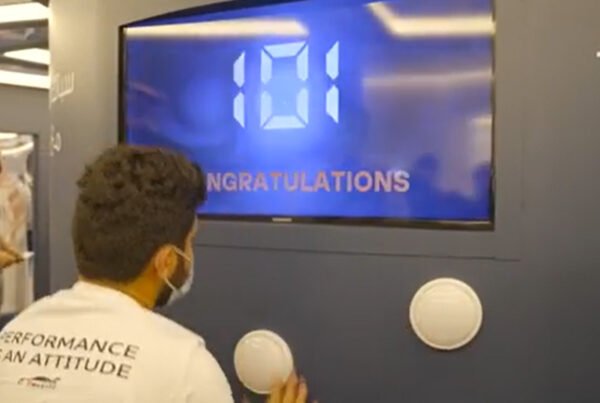
So we told her the awkward part. A leaderboard would make that room worse. No senior guest wants to see his name sitting at forty-one. And a camera wall was out, since several of the women on her list would not want their faces on a screen, whatever a consent form said.
She went quiet on the call, and then she mentioned the meals.
Every Ramadan the company funded meals through a charity it had worked with for years. It got one line in the chairman’s speech and a polite clap.
That line was the whole event, sitting there unused.
Four hundred hands and no names
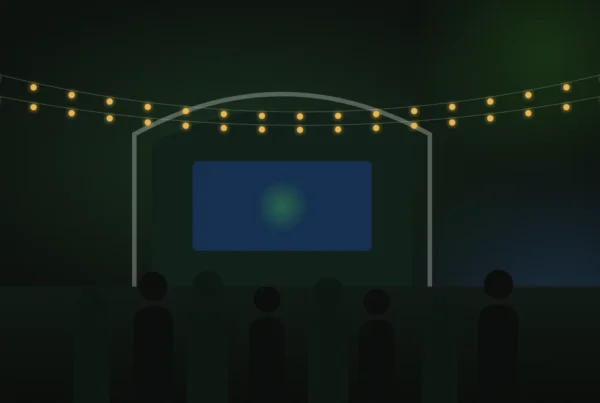
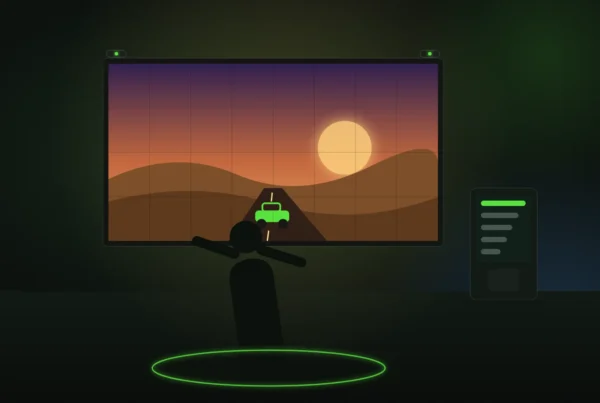
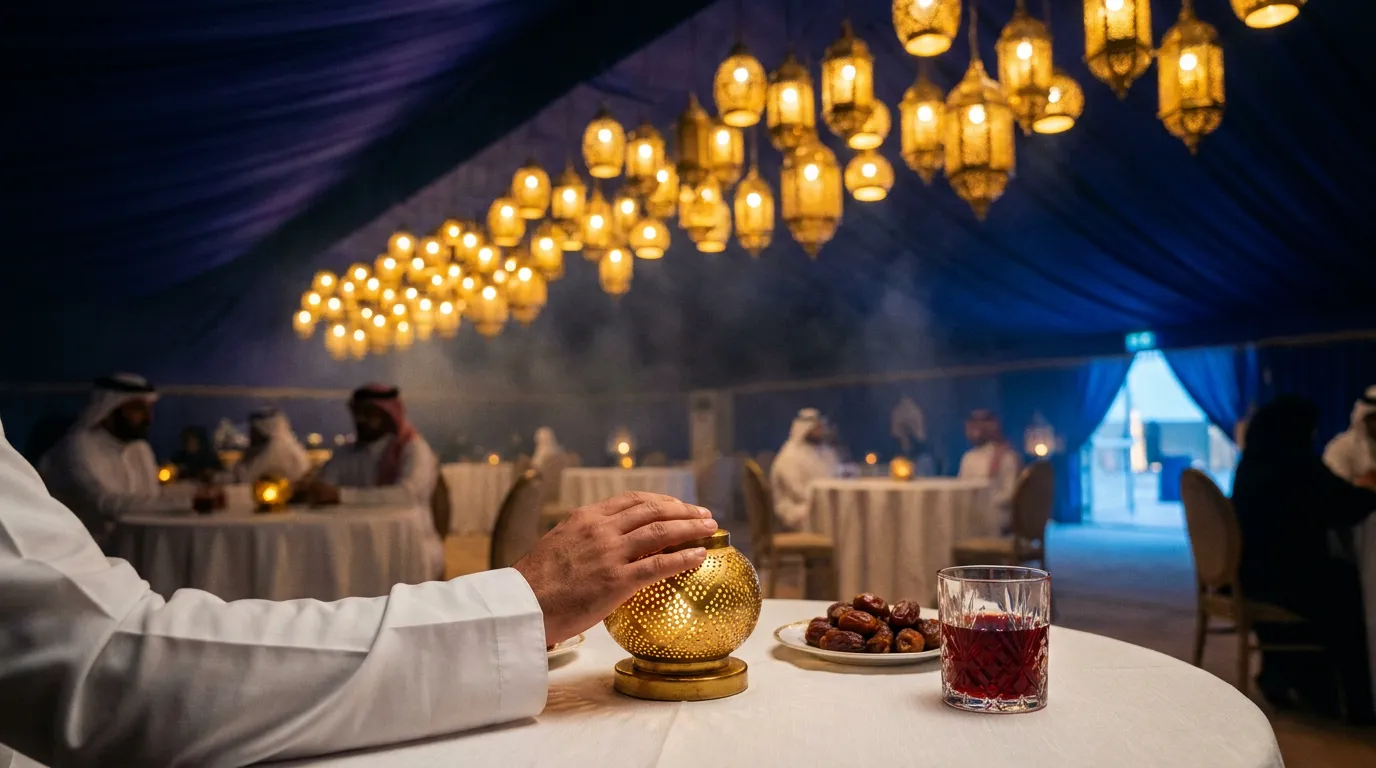
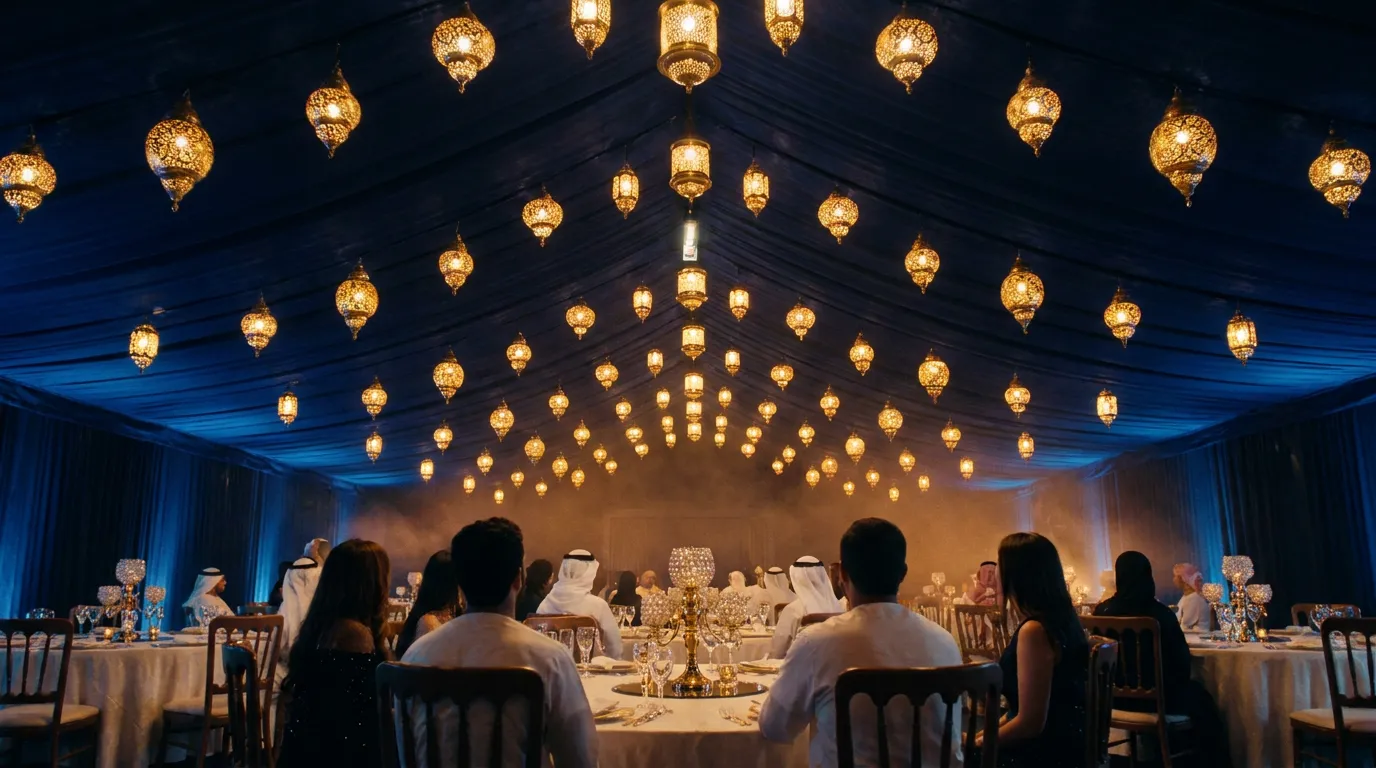
We sketched it that afternoon. A small pierced brass lantern on every table, with a touch sensor hidden in its base. Rest your hand on it and the lantern hanging above your table comes on. Each touch adds to the meals the company has already set aside, so guests pay nothing and sign nothing. No names, no camera. A slim line of text on the back wall keeps the count in Arabic and English.
By the end of the night the tent ceiling would be full, and the chairman would have nothing left to announce. The room would have done it for him.
Her finance director approved the budget in a morning, with one condition. The count had to stop at the agreed amount. We liked him immediately.
A terrace with a man and a hose
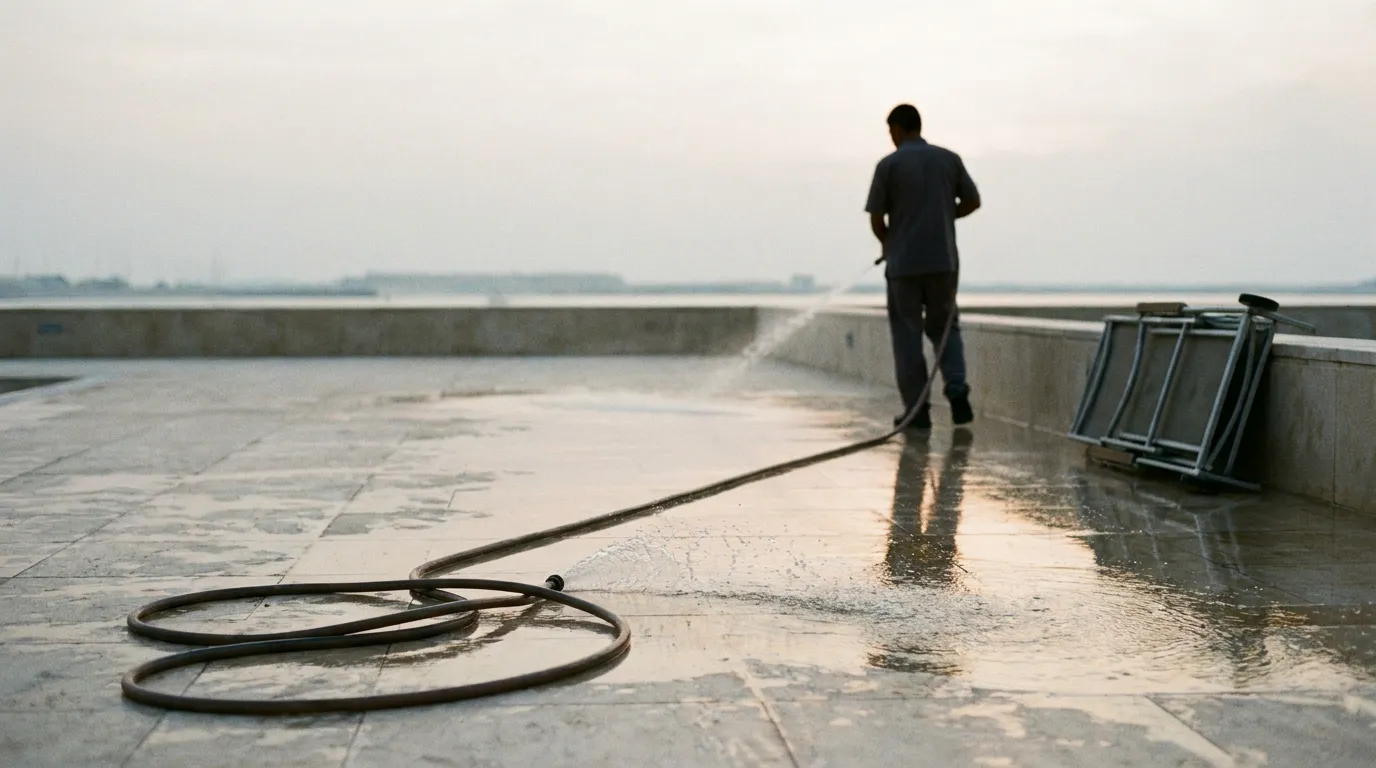
The venue turned out to be a hotel terrace, two sunbeds and a man hosing down the tiles. The tent would not exist until a week or so before Ramadan.
The hotel sent last year’s drawings, and those showed us the catch. This tent would serve a public iftar every evening, and our client had bought the late sitting on one night only. Iftar guests would leave around nine, the hotel would turn the tables, and hers would arrive at eleven.
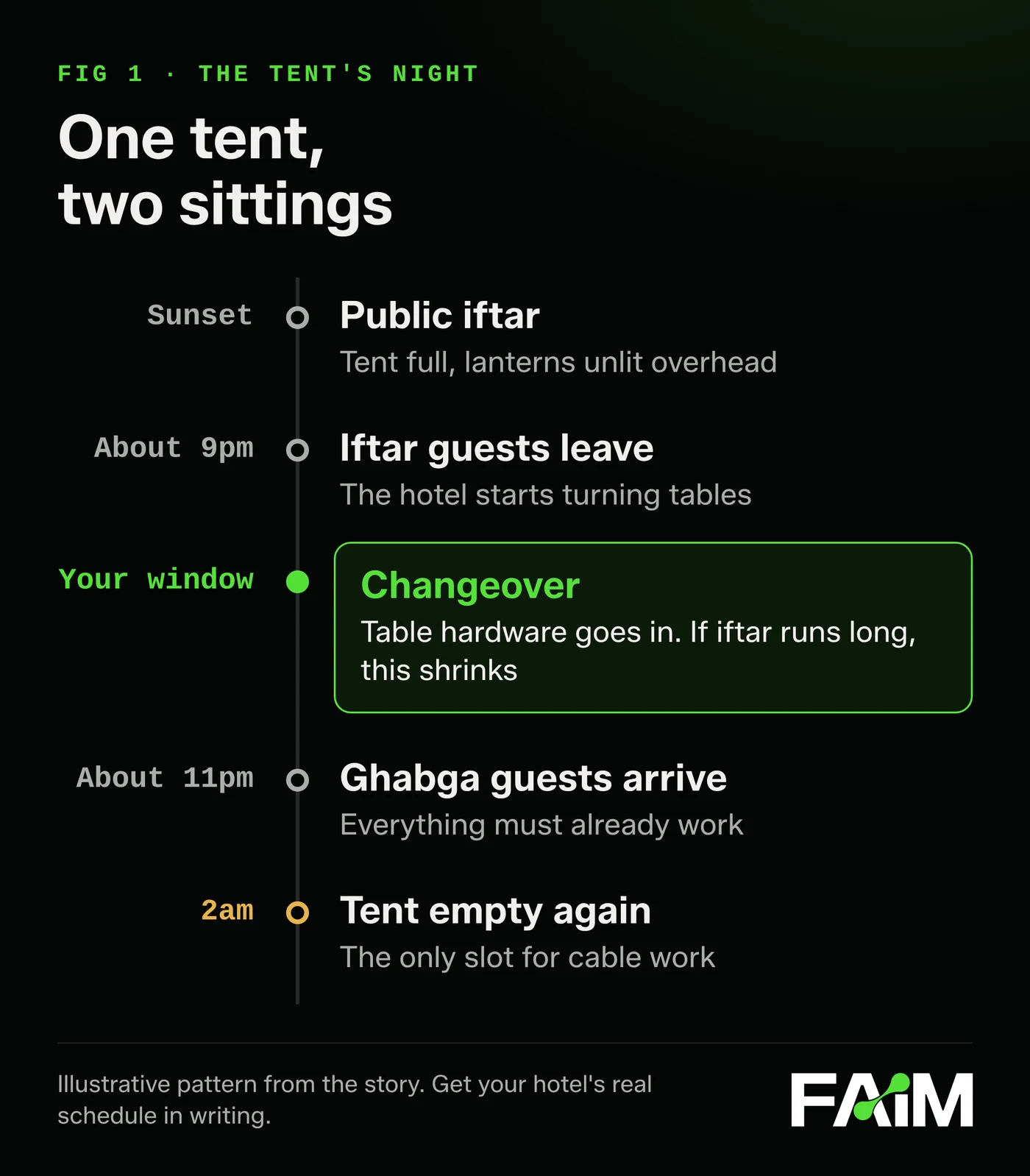
So the hanging lanterns went up before the first night of the month, unlit, and passed as decoration. The table lanterns stayed in crates behind the kitchen, waiting for a changeover that might be two hours or much less.
During Ramadan, Muslim employees in Bahrain and Saudi Arabia work a maximum of six hours a day. The riggers would be fasting, and so would the hotel’s electrician, so we planned the install around their short mornings.
When you book a Ramadan tent, ask who else is using it that day. Your setup window is whatever the last iftar table leaves you, so get that time in writing.
- Twelve weeks outIdea and tent bookingGet last year’s drawings and the iftar schedule.
- Six weeks outBuild and Arabic reviewA native reader checks Arabic in the live system.
- Before the first nightCeiling rigged, unlitIt has to look right switched off.
- An early night of RamadanSit in the full tentTest wireless and sound with real guests present.
- The nightChangeoverTable hardware arrives as the iftar tables turn.
The table we booked for four
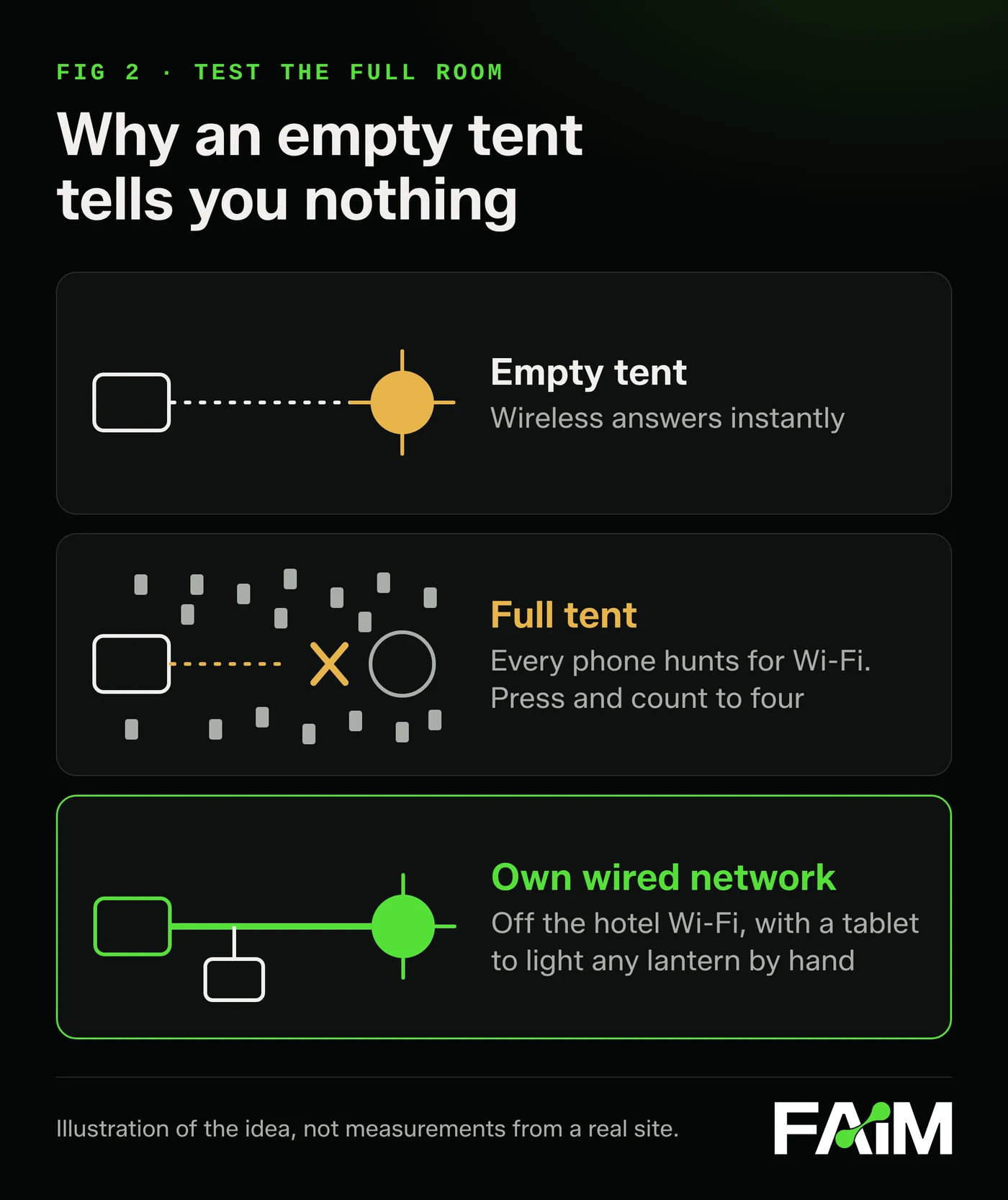
The table lanterns talked to their controller over wireless. In our workshop they answered instantly. They did the same in the empty tent the morning it went up.
We do not trust an empty room, so on an early night of Ramadan we booked a table for four at the public iftar. The lamb was excellent. Under the tablecloth sat a test lantern and a small laptop logging every signal.
At sunset the tent was half full and the lantern answered. When the families reached the coffee, the reply came late. By the time the room was packed, with every phone in the tent hunting for hotel Wi-Fi, the lantern stopped. You could press it and count to four.
Four seconds is nothing at a trade show. With a chairman’s hand resting on brass and nothing happening above him, it would be all anyone remembered.
We took the wireless out. Each table got a flat cable under the carpet on its own network, with nothing depending on the hotel. Our builds are offline-first, with redundant inputs and automatic recovery, and here the extra input was an operator tablet at the back of the tent that could light any lantern by hand.
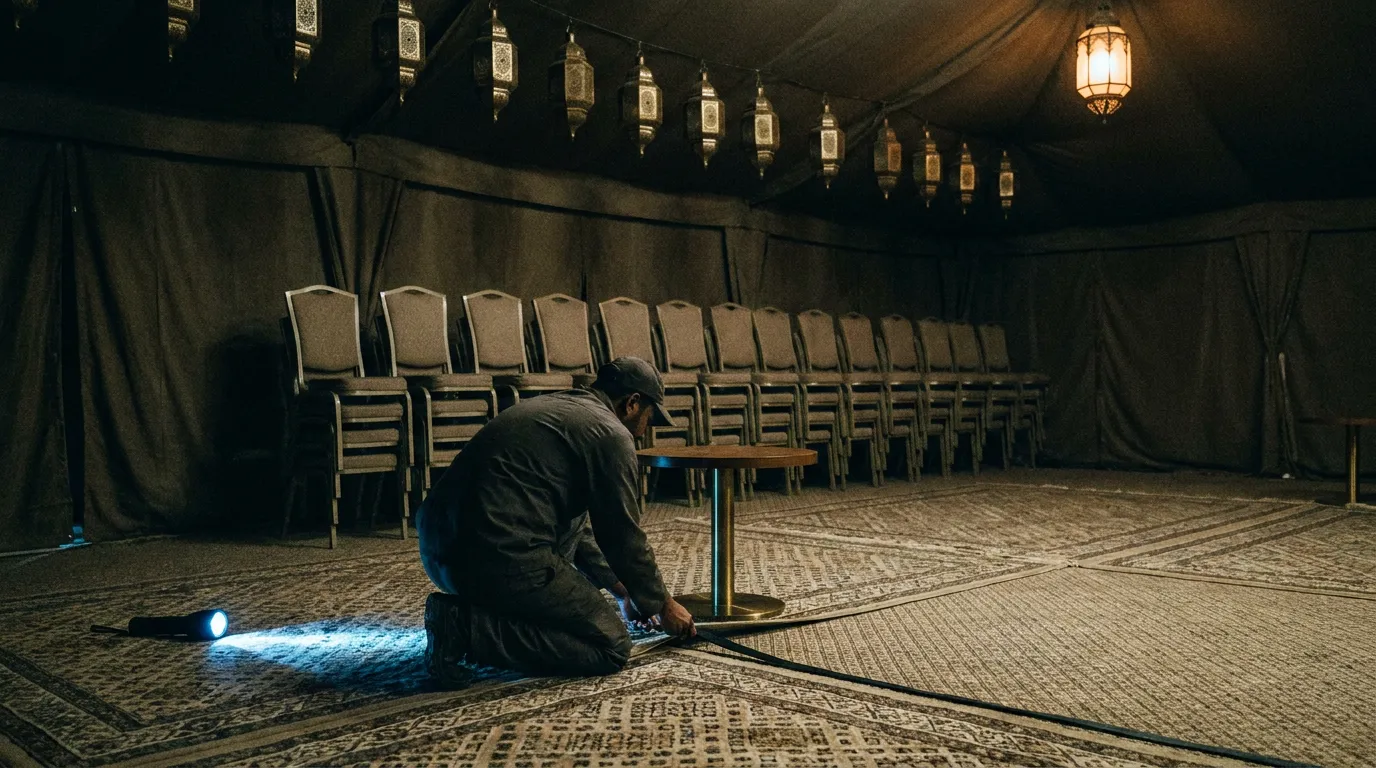
The cable work had to wait until the tent emptied. That meant two in the morning.
The word that changes with the number
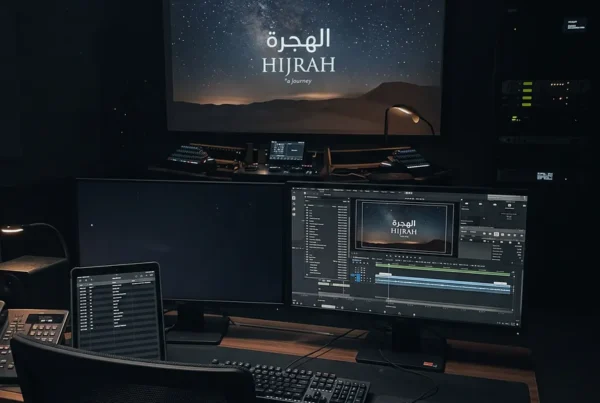
The count on the back wall was a simple template: a number, then the word for meals. Our developer dropped the Arabic word into the same slot and sent it for review.
A colleague who reads Arabic natively sent it straight back. In Arabic the noun changes with the number. One meal has its own form. Two has another. Three to ten take the plural, and from eleven the noun goes back to the singular. Unicode’s plural rules list six categories for Arabic, where English gets by with two.
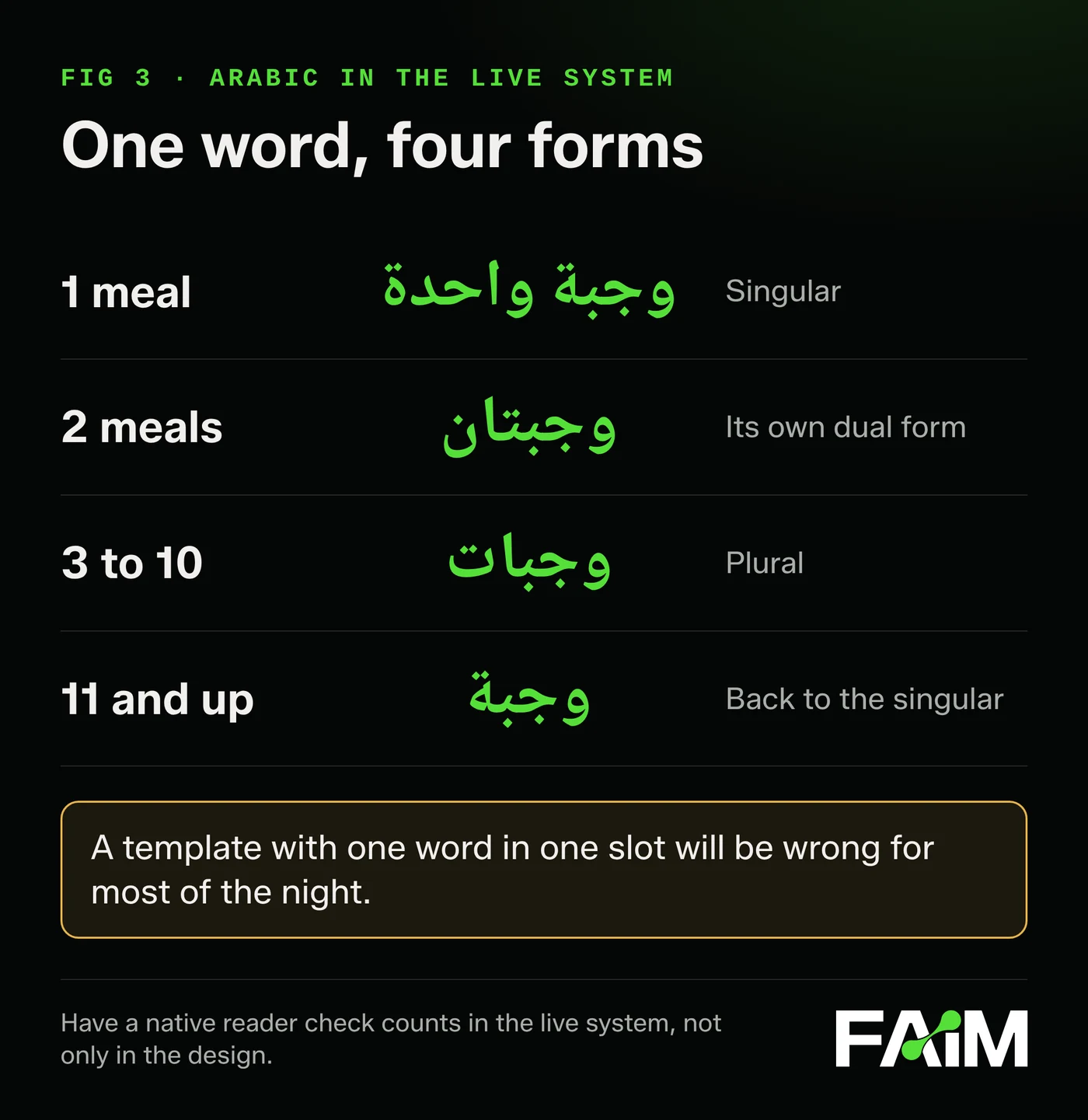
Our template would have been wrong for most of the evening, in large type. We wrote out every form and ran each number up to the cap.
A call at iftar
Ramadan began a day later than the printed calendars had suggested, which is the nature of a month that starts with a moon sighting. Her evening was now the tenth night of the month, not the eleventh, and the events director rang at sunset with the menus already in their boxes.
We had asked her in December to keep the Hijri date off anything printed, and she had. On our wall it was one field on the operator’s tablet. We changed it before she finished her sentence.
Table fourteen
On the night, iftar ran long. The crates came out through the kitchen corridor at nearly half past nine, past the smell of cardamom and hot oil. Then the banquet captain moved a row to widen an aisle, and one cable finished a hand short of its table. We carry spares for this.
The guests came in after taraweeh. An oud started in the corner, softly enough to talk over.
The chairman sat down, finished his greeting, and rested his hand on the lantern in front of him. Above him a single warm light came on and slid along the ceiling to the next one. Nobody clapped. A few heads tilted back. Then people started reaching out, one hand each, without breaking off their conversations.
At twenty to midnight a glass of Vimto went over at table fourteen.
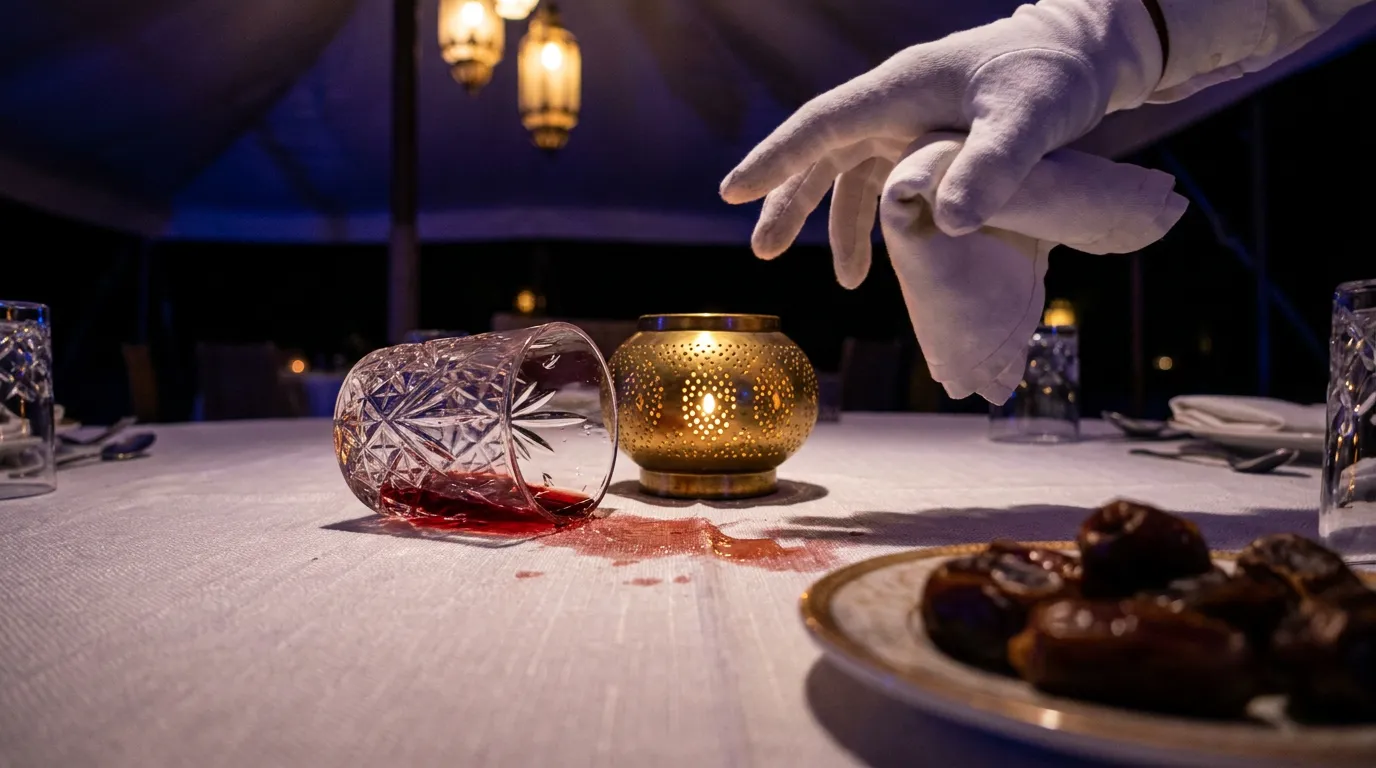
Red ran across the linen and straight into the base of the lantern. It went dark. Thirty seconds later an elderly broker put his hand on it and nothing happened above him. He frowned and tried again.
Our operator had already seen that table drop off her tablet. She lit his lantern by hand from the back of the tent, and it came on as if nothing had gone wrong. He nodded and returned to his dates. While the waiter changed the cloth, our technician swapped in a spare under a folded napkin.
Close to half past twelve the last table lit, and the count on the wall stopped at the amount the finance director had signed. The chairman stood, looked up, said very little and sat back down. It was the best speech he gave all year.
The events director found us by the tent mouth around one. She never mentioned the technology. She asked if the lanterns could come back next year.
We packed the crates at two. One of them smelled faintly of Vimto.
This story is a composite drawn from common situations at events in Bahrain and Saudi Arabia, not a single client project.
Planning a corporate ghabga for Ramadan 2027
A corporate ghabga in Bahrain or Saudi Arabia is one of the few events where less technology usually wins, and the planning starts earlier than people assume. Ramadan 2027 is expected to begin on Monday 8 February, subject to official moon sighting. Our interactive stand builds typically take four to six weeks, with a minimum of five to ten working days, and you should count that back from the day the tent goes up. A decision by mid December leaves room to test properly.
Buyer checklist
- Is the tent shared with a public iftar, and what time do you really get it?
- What can stay rigged overhead for the whole month, and does it look good switched off?
- Does anything depend on hotel Wi-Fi? Test it during a full sitting.
- Who on your guest list would rather not be named or filmed? Design for them first.
- Can every interactive point be triggered by hand from one place if a sensor fails?
- Has a native reader checked the Arabic in the live system, including any numbers and counts?
- Have you kept Hijri dates off anything that gets printed?
- Who from your supplier stays until the last guest leaves, and what spares do they carry?
Hosting a ghabga or Ramadan gathering?
Tell us the hotel and the date. We will tell you plainly what suits the room, which may be less technology than you expected. Our team is on the ground in Saudi Arabia and Bahrain, and a member of FAIM commissions and stands by every installation. See our smart event technology, or explore the live demo.
Start the conversationWhatsApp us+973 3557 7062
Or email info@faimglobal.com.
Related reading: getting names right at an awards night, Founding Day 2027 activations during Ramadan and driving every display from one content panel.
Questions buyers ask
What is a corporate ghabga?
A ghabga is a late gathering held between iftar and suhoor during Ramadan. Companies in Bahrain and the wider Gulf host them for clients, partners, staff or the media, often in a hotel tent, as a relaxed way to say thank you.
How early should we plan a Ramadan event?
Ramadan 2027 is expected to begin on 8 February, subject to moon sighting. Our interactive stand builds typically take four to six weeks, with a minimum of five to ten working days, so start by mid December and count back from when the tent is available.
Will interactive technology spoil the mood of a ghabga?
It can if it demands attention. Loud games, leaderboards and countdowns suit a stand better. At a ghabga, choose something guests can join with one hand while they carry on talking, and agree the sound level with the hotel.
Can it run without the hotel Wi-Fi?
Yes. Our builds are offline-first, with redundant inputs and automatic recovery, so a full tent of phones on the hotel network does not touch the installation.
Can guests stay anonymous?
Yes, and at a private gathering we usually recommend it. An experience can work with no names, no cameras and no data taken from guests at all.
Do you work in Arabic and English, and in Saudi Arabia?
Bilingual Arabic and English is standard on our work, and we have an experienced team on the ground in both Saudi Arabia and Bahrain.
Sources
- Gulf News: When will Ramadan 2027 begin? (expected start of 8 February 2027, subject to moon sighting)
- Morgan Lewis: Ramadan in the Arab Gulf Cooperation Countries (six-hour limit for Muslim employees in Bahrain and Saudi Arabia)
- Bahrain Bourse: Ramadan corporate ghabga (a corporate ghabga for stakeholders and media in Bahrain)
- Unicode CLDR: Language plural rules (six plural categories for Arabic)
Found this useful?