

In October our own website passed every technical check and still did not show up in a single search we tried, not even for our own name. Fixing that taught us more about SEO than any course. We turned everything we learned into the SEO Brain: a free toolkit, built in Bahrain, with 23 guides, a website audit tool, a robots.txt generator for search and AI crawlers, a Bahrain and Saudi keyword map and the full skill we use with Claude. No sign-up. It lives at faimglobal.com/seobrain.
The report landed on a Saturday afternoon in late October, and the first line was not the one we wanted.
Every page on faimglobal.com returned a clean 200. Every page had its canonical in place. The SEO plugin scored us 100 almost everywhere. By any checklist, the site was healthy.
Then came the second line. We had searched for our own services, in the phrases a buyer in Manama or Dammam would type, and for our own company name. FAIM did not appear once.
Part of that was the test itself: the searches ran from outside the region, so local results were missing. But the rest was harder to explain away. Search Console had never been properly connected, so we had no real data on what people searched for or what we ranked for. Three people had opened our enquiry form in one week and none of them sent it. Fourteen older enquiries were sitting unread.
We had been writing more posts, believing content was the answer. It was not. We could not measure, our form leaked, and the pages that sell our work were the thinnest on the site.
What we changed first, and why it was not keywords
We put the work in a fixed order and stuck to it. Measurement first, because without Search Console and Bing Webmaster Tools every other decision is a guess. Then the enquiry path, because a visit that cannot become a conversation is wasted. Then positioning and proof: real projects, real venues, the cities where the work was delivered. Only after that did we touch new pages and keywords.
The rule we now work by: fix the funnel before you feed it. If you cannot say how many enquiries your site produced last month, you are not ready for a keyword plan, whatever your keyword tool says.
We also set a rule for every number. Each finding carries a label: verified, seen in a tool, our analysis, an assumption, or still to be checked. It sounds slow. In practice it stopped us from repeating figures we could not stand behind, which is the fastest way to lose a client’s trust.
Why we are giving it away
Most businesses we meet in Bahrain and Saudi Arabia are in the same position we were. They have a decent website, they have paid for a plugin or two, and they have no idea why the phone is quiet. The tools that would tell them are mostly free. What is missing is a clear order of work and someone honest about what each tool can and cannot show.
So we packaged the whole thing. The SEO Brain is the method we use on our own site, written down and made usable by anyone.
- A website audit tool. Answer 19 quick checks about your site and get a scored audit file plus a ready prompt for Claude that verifies every point live and changes nothing without your approval. Your answers never leave your browser.
- A robots.txt generator for 2026. Decide separately on AI search crawlers, the fetchers that act for a person, and the crawlers that collect training data, then download a clean file.
- A Bahrain and Saudi keyword map. More than a hundred buyer phrases in English and Arabic, grouped by service, ready to check against real volumes in Keyword Planner.
- A free tools guide. Search Console, Bing Webmaster Tools, Screaming Frog, PageSpeed Insights and others, with what each is good for and where its free limit sits.
- The full FAIM SEO skill. Nineteen files you can download as one ZIP and use with Claude: the modules, templates, checklists and the benchmark script.
The part about AI search
More of your future customers will ask an assistant before they ever type a search. The good news is that the search engines now show some of this for free. Bing Webmaster Tools has an AI Performance report that shows how often Copilot cites your pages. Google Search Console now separates impressions in AI Overviews and AI Mode. Neither tells you everything, but both are first-party data, and both cost nothing.
What gets a business named in those answers is not a trick. It is a plain first paragraph that says what you do, for whom and where, proof sitting beside the claim, the same company details everywhere, and other sites that mention you by name. The SEO Brain walks through each of these, with a page on how to ask the engines yourself and record who they cite.
What we will not claim
We benchmarked the skill against our own earlier versions and published the scores, along with why they prove less than they seem: we wrote both the test and the skill. We do not call the SEO Brain the best or the first, because we have no fair comparison that shows it. What we can say is that it is free, it is built here, and it is the same method we run on our own site every week.
The Brain also keeps a credit we care about. The browser research steps were inspired by Daniel Sócrates of SEO Genome, whose prompt method showed how much an assistant with a browser can check in a few minutes. Our version is written for Bahrain and Saudi Arabia and goes further into measurement, Arabic and AI search, but the spark was his.
Open the SEO Brain. Audit your site, build your robots.txt and download everything, free: faimglobal.com/seobrain.
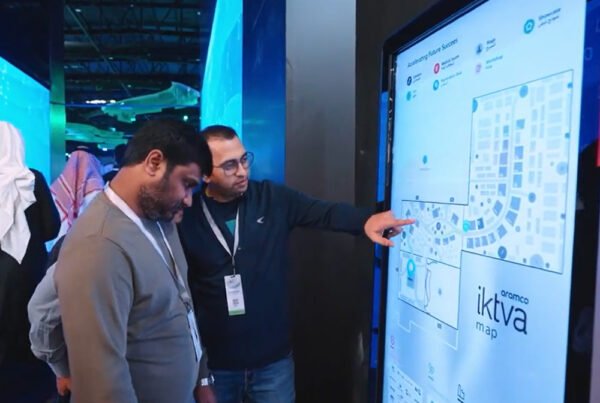
Planning a stand or an activation and want to see our interactive work in action? Explore the Live Demo or talk to us on WhatsApp.
Found this useful?










Great content. Thank you, guys.