
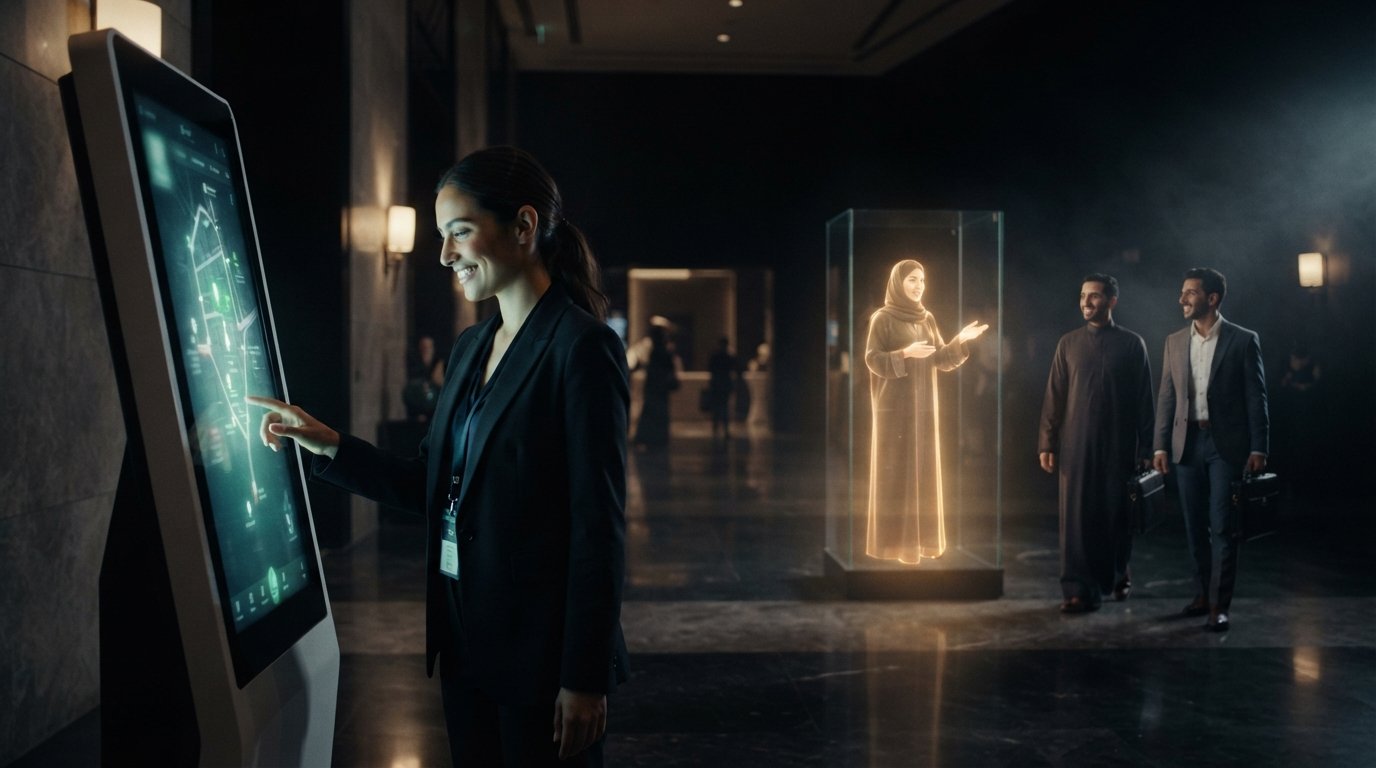
Discover how interactive wayfinders and holographic hosts reduce visitor confusion, simplify reception and create a warmer modern welcome.
The first few minutes of an event can shape the visitor’s entire experience.
A guest arrives in an unfamiliar venue. They may not know where to register, which entrance to use or how to find the right hall. In a multilingual event, they may also be unsure whether assistance will be available in their preferred language.
A printed sign can point in one direction. A staff member can answer one visitor at a time. A connected digital welcome system can do considerably more.
An interactive wayfinder helps people understand where they are and where they need to go. A holographic host creates a warmer introduction, answers common questions and presents information consistently. Together, they turn reception from a functional checkpoint into the beginning of the experience.
The welcome is part of the event
Modern visitors expect technology to make an experience easier, not simply more impressive.
Freeman’s research involving nearly 2,100 event attendees found that 64% considered immersive experiences a positive influence on their event experience. Another 44% valued technology that made an event easier to consume. [1]
This distinction matters. Technology should not create an additional obstacle between the visitor and their destination. Its first responsibility is to remove uncertainty.
A useful visitor welcome should quickly answer four questions:
- Where am I?
- Where do I need to go?
- What is happening here?
- What should I do next?
Digital wayfinding handles the practical questions. An interactive hologram can handle the conversational and emotional side of the welcome.
An interactive wayfinder removes the first point of friction
Traditional signs are static. If a hall changes, an entrance closes or a programme moves to another room, printed directions may immediately become outdated.
An interactive wayfinder works differently. It can show the visitor’s current position, display relevant destinations and draw a clear route from the kiosk to the selected location. A QR code can transfer that route to the visitor’s phone, allowing them to continue without repeatedly stopping to check signs.
A 2025 study published in Mayo Clinic Proceedings: Digital Health evaluated a browser-based digital wayfinding system in a tertiary care hospital. Among the 54 visitors surveyed after implementation, 87% reported reduced navigation time, 83.3% reported reduced psychological stress and 94.4% preferred the digital system to traditional signage. [2]
The study took place in a hospital rather than an event venue, and the sample was small, so the figures should not be presented as a direct prediction for every exhibition or conference. The underlying problem, however, is familiar: people are trying to navigate a large building they do not know.
For event organisers, successful wayfinding can mean:
- Fewer queues at information desks
- Fewer interruptions for event staff
- Faster movement between entrances, halls and meeting rooms
- Clearer accessibility information
- More consistent multilingual directions
- A smoother experience during busy arrival periods
The goal is not to remove people from reception. It is to let the technology handle repetitive navigation questions so the team can focus on visitors who need personal support.
A holographic host makes technology feel more welcoming
Wayfinding provides direction. A holographic host adds presence.
Instead of facing another silent screen, visitors meet a life-size digital host that can welcome them, introduce the event and answer common questions. The experience can operate in Arabic and English, maintain the organisation’s tone of voice and present the same core information throughout the day.
A 2025 review of holographic displays in museum settings, published in npj Heritage Science, found that holography supports natural viewing and emotional connection, with realism and depth playing a central role in engagement. Related museum research recorded curiosity and wonder as the predominant visitor responses, and a study at the Shaikh Abdullah Al-Salem Cultural Centre in Kuwait found that holographic storytelling increased dwell time, participation and recall when it supported a coherent narrative. [3]
That is an important design principle. A hologram should have a job.
It could:
- Welcome visitors in multiple languages
- Explain the event schedule
- Answer frequently asked questions
- Introduce a product, destination or organisation
- Direct visitors towards the interactive wayfinder
- Present safety or access information
- Invite visitors to take and receive a branded selfie
- Continue operating consistently during busy periods
The experience remains visually striking, but the value comes from what it helps the visitor accomplish.
Treating every visitor with the same care
A busy reception desk can unintentionally create inconsistent experiences. One visitor may receive a detailed welcome, while another receives a quick direction because several people are waiting.
A connected digital welcome helps establish a consistent foundation.
Every visitor can receive the same clear information, the same language options and the same branded introduction. The system does not become tired, impatient or distracted during peak arrival periods.
Consistency should not mean making the experience cold or impersonal. The wording, voice, visual design and interaction flow can all be shaped around the event and its audience.
Visitors should still be able to approach a staff member whenever they need additional help. The technology provides the first layer of support; the human team remains available for situations that require judgement, reassurance or individual attention.
Wayfinder, hologram or combined welcome?
The right solution depends on what the venue needs to achieve.
| Experience | Primary role | Best used for |
|---|---|---|
| Interactive wayfinder | Removes navigation friction | Maps, routes, venue information and directions |
| Holographic host | Creates attention and connection | Welcomes, introductions, questions and storytelling |
| Connected reception system | Manages visitor arrival | Registration, badges, access control and schedules |
| Combined experience | Connects information, emotion and movement | Exhibitions, conferences, public venues and branded events |
A wayfinder is the practical guide. A hologram is the digital host. Registration technology confirms who the visitor is and what access they have.
When these systems share the same information, the experience becomes much more coherent. A schedule change can appear at reception, on the kiosk and across visitor-facing screens without separate manual updates.
FAIM’s connected approach
FAIM develops wayfinding and reception experiences as connected systems rather than isolated screens.
The Marina Walk Wayfinder, developed for Bahrain Marina, connects visitor phones, touchscreen kiosks, a large-format display, a staff console and an administration system through one central platform. Visitors can explore locations on the kiosk and continue the route on their phone.
The wayfinding foundation can include:
- Routes created from the venue floor plan
- Touchscreen maps based on the kiosk’s location
- QR-based mobile directions
- Editable venues, opening hours and categories
- Multilingual labels
- Right-to-left language support
- Offline operation for locations with unreliable internet
- A consistent experience across kiosks and phones
For reception, the same technical base can support check-in, badge printing, programme information and welcome screens linked to the day’s schedule.
FAIM’s Interactive Hologram Experience adds a life-size digital host in an 86-inch hologram display. The host can welcome visitors, communicate in Arabic and English, answer event questions and invite people to capture a selfie they can receive on their phone.
One system helps visitors find their destination. The other ensures the journey begins with a recognisable human presence.
From technical warm-up to emotional warm-up
The arrival experience has traditionally been treated as preparation: register the visitor, provide a badge and direct them towards the main event.
That view is changing.
Reception technology can now act as both a technical warm-up and an emotional warm-up.
The technical warm-up removes practical barriers. The registration is found, the badge is printed and the route is clear.
The emotional warm-up introduces the event’s personality. It helps the visitor feel acknowledged, gives them something interesting to engage with and creates a natural transition into the wider experience.
Freeman’s 2025 Experience Trends Report, based on a survey of more than 2,600 attendees and organisers, found that attendees who experienced a memorable, goal-aligned peak moment were 85% more likely to return. Only 40% of attendees said they had actually experienced one, which shows how much room events still have to improve. The same research found that 61% of attendees understood immersive experiences primarily as hands-on product interaction. [4]
This reinforces a simple principle: visitors remember what they can meaningfully experience, not just what they can see.
Designing technology that never leaves someone behind
Visitor technology should be inclusive by design.
A touchscreen placed too high, small interface text, unclear icons or an experience available in only one language can turn innovation into another barrier.
An effective installation should consider:
- Arabic and English content
- Right-to-left interface layouts
- Readable type sizes and strong contrast
- Routes suitable for wheelchair users
- Clearly marked lifts, ramps and accessible entrances
- Simple instructions with minimal steps
- Audio levels appropriate to the venue
- A visible option to request staff assistance
- Offline functionality where connectivity is unreliable
Every visitor does not need to interact with the system in exactly the same way. They should, however, receive the same level of care, clarity and respect.
How to measure the experience
The strongest visitor technology projects begin with measurable objectives.
For a wayfinding system, organisers can track:
- Navigation-related questions at reception
- Average time required to find a destination
- QR route scans
- Most frequently searched locations
- Kiosk completion rates
- Staff interventions
- Visitor confidence in finding rooms
For a holographic welcome, useful measurements include:
- Interaction numbers
- Average engagement time
- Questions asked
- Language selection
- Selfie or QR interactions
- Movement from the hologram to another experience
- Visitor feedback
- Return visits or completed enquiries
Measurement prevents the installation from becoming technology for technology’s sake. It reveals whether the experience is genuinely making arrival clearer, faster and more engaging.
A modern invitation begins at the entrance
The entrance is no longer just the space visitors pass through before the experience begins. It is the first chapter of the experience.
An interactive wayfinder says, “You can find your way.”
A holographic host says, “You are expected, and you are welcome.”
Used together, they create a modern invitation that combines practical direction with personality. Visitors receive consistent information, multilingual support and a clearer path through the venue, while event teams gain a connected platform they can update and manage through event technology built for the region.
The technology should never attempt to replace genuine hospitality. Its purpose is to make hospitality more consistent, accessible and scalable.
That is how a screen becomes a guide, a hologram becomes a host and an arrival becomes part of the story.
See the work, as visitors see it
These are live screenshots of FAIM project pages and products, captured today, not mock-ups. Swipe through, then open any of them and use it yourself.
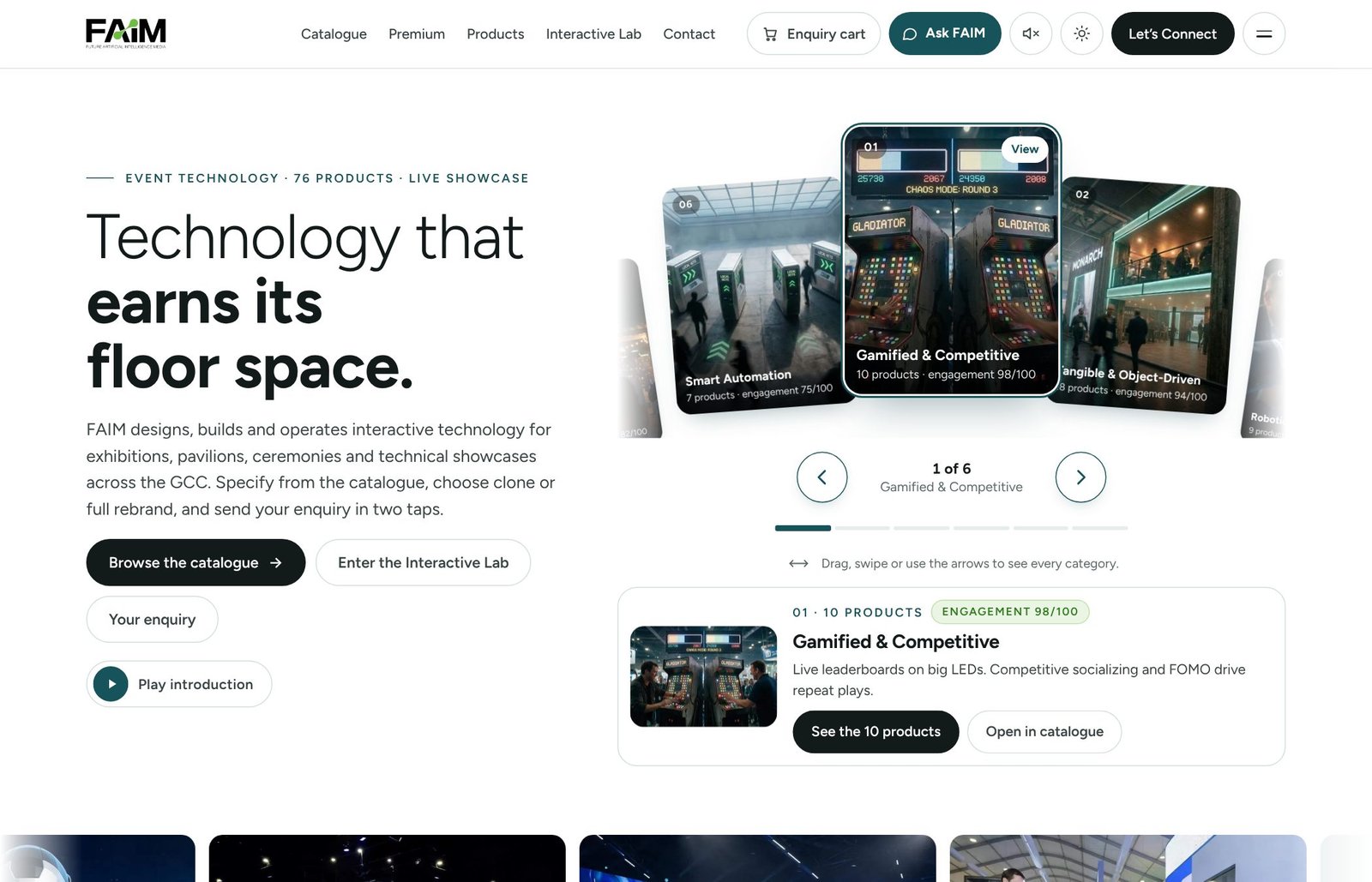
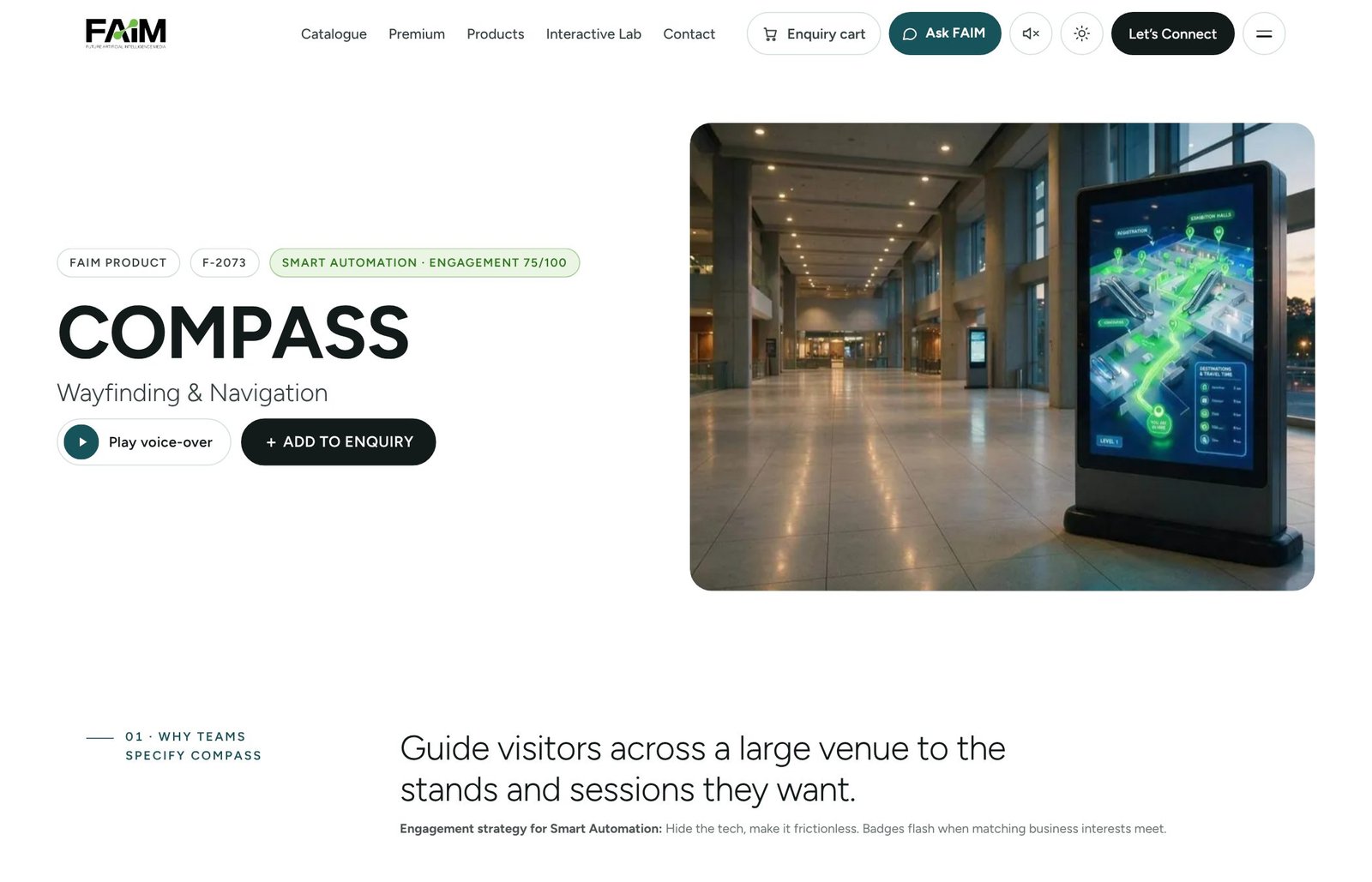
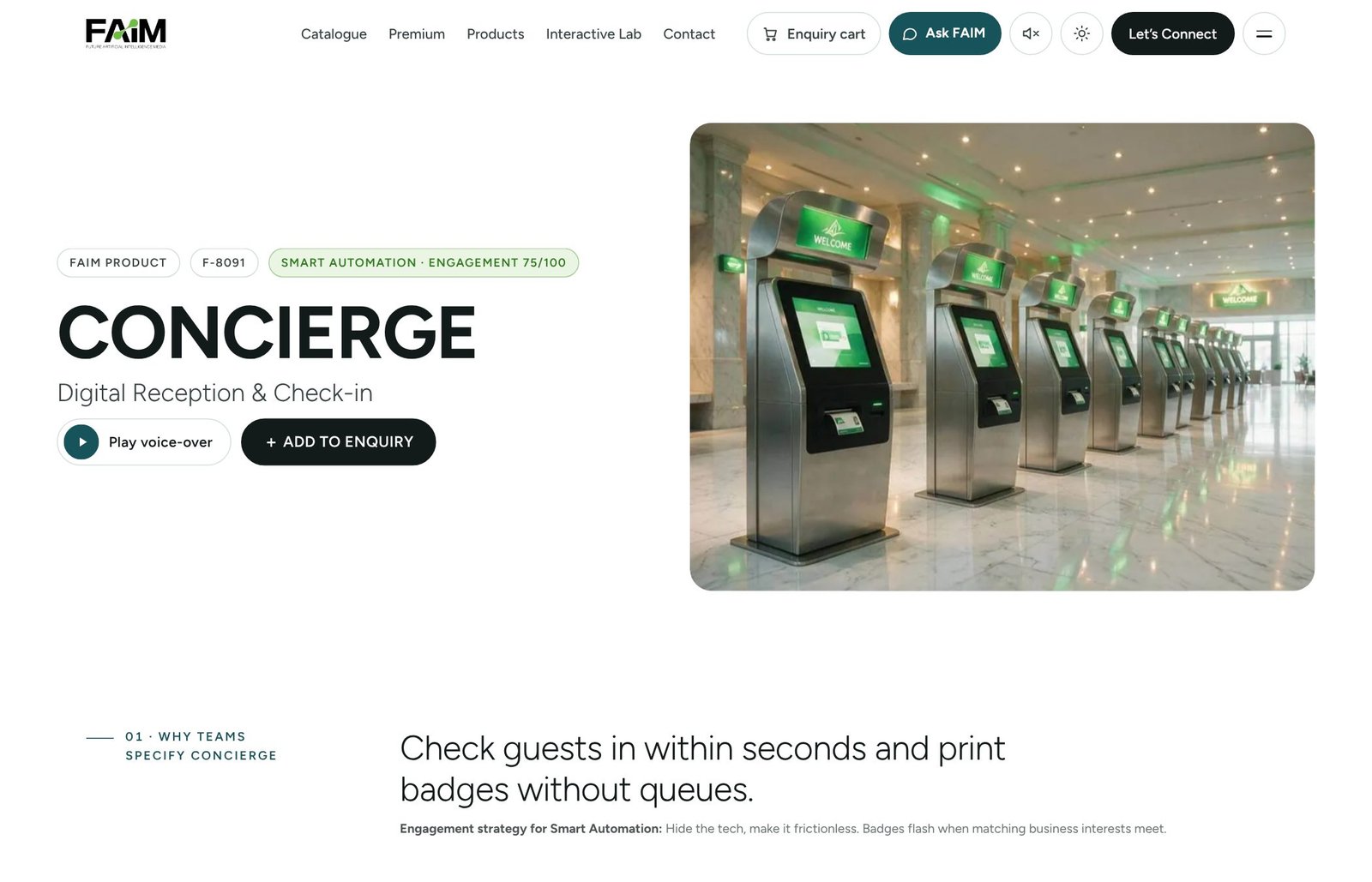
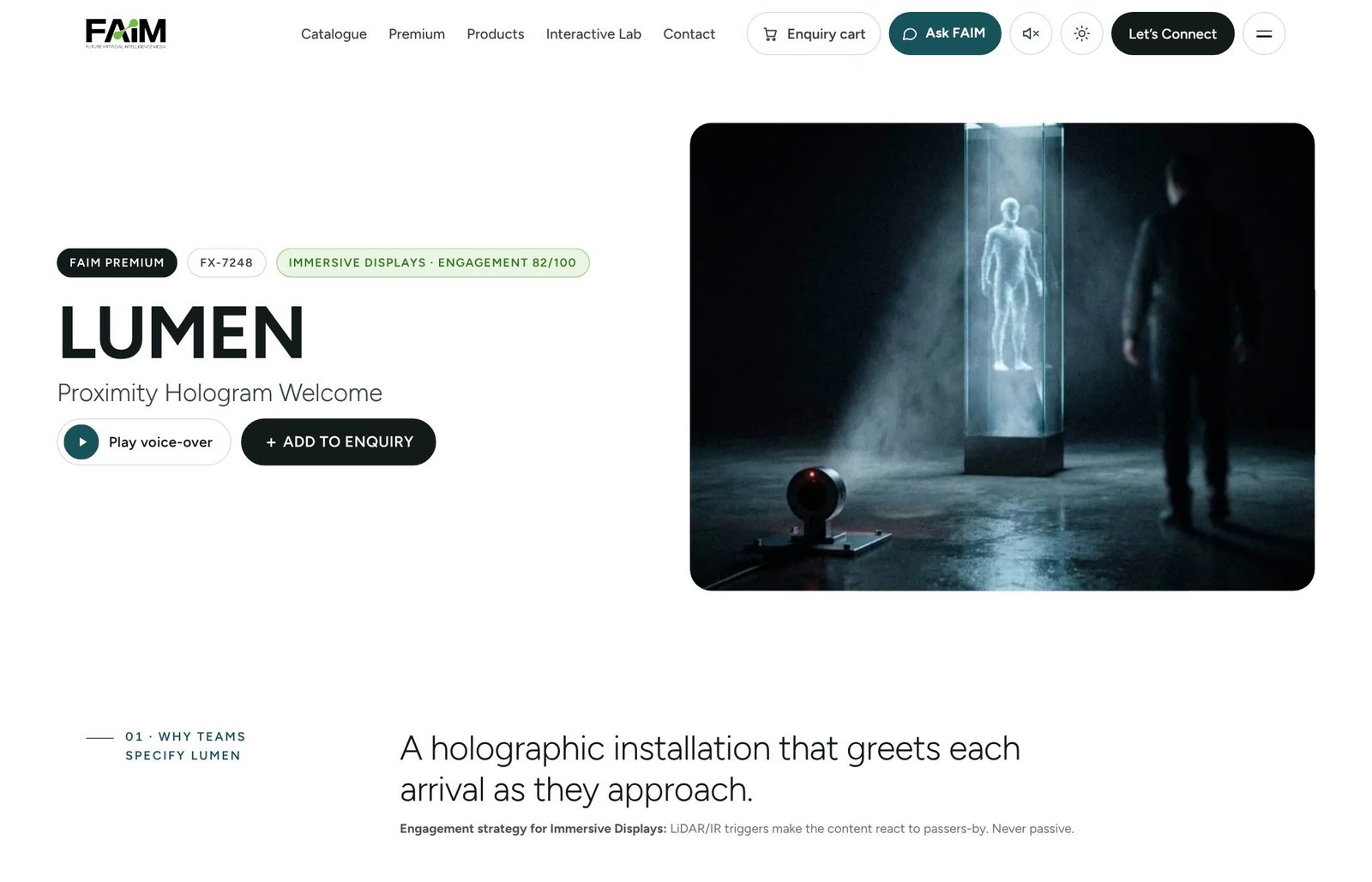
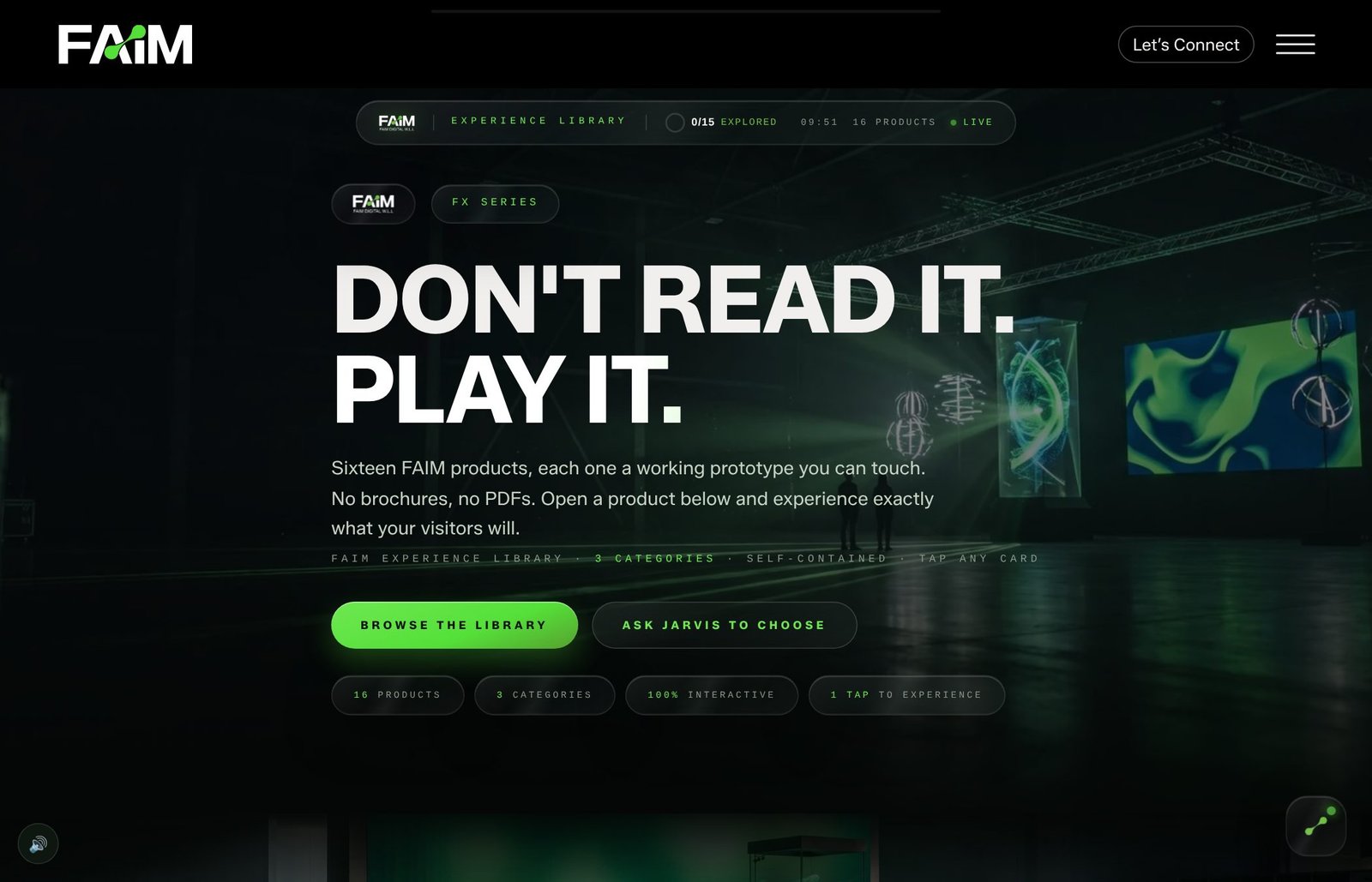
Swipe or drag sideways to move through the projects
Explore FAIM wayfinding and reception
Discover FAIM’s interactive wayfinder, reception and holographic visitor experiences at FAIM Wayfinding and Reception, or step into the JARVIS Interactive Lab and let it choose the right experience for your event.
Sources
- Freeman Trends Report: 2024 Attendee Intent and Behavior (survey of nearly 2,100 attendees, November 2023)
- Internet of Things-Based Wayfinding for Hospital Visitors, Mayo Clinic Proceedings: Digital Health, 2025 (tertiary care hospital, 54 post-implementation respondents)
- A Review of Holographic Technology in Museums, npj Heritage Science, 2025 and holographic storytelling study, Shaikh Abdullah Al-Salem Cultural Centre, Kuwait
- Freeman Experience Trends Report 2025: Unpacking XLNC (survey of more than 2,600 attendees and organisers, with IMEX)
Found this useful?



Thank you