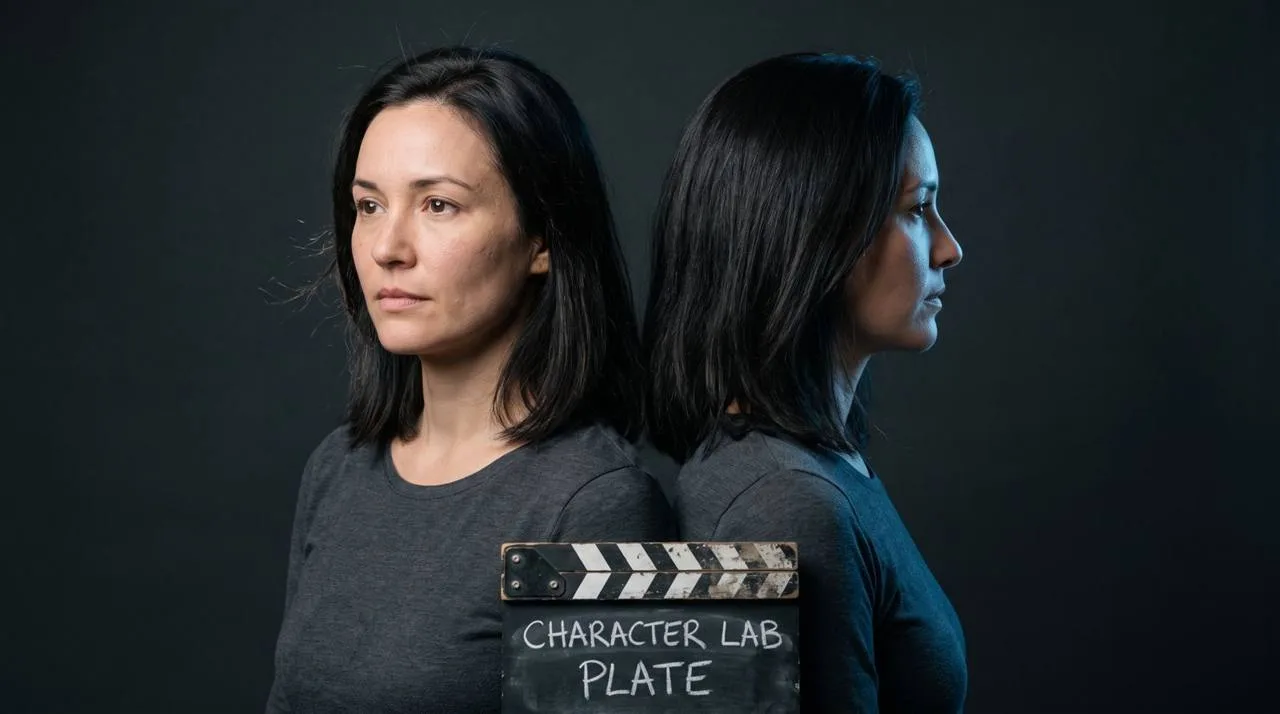
The Character Lab
Character consistency is the hardest problem in AI filmmaking and the one that separates hobbyists from production work. The answer is a strict pipeline: lock the identity first, style it second, stage it third. Never skip steps. Never combine steps.
The consistency protocol (memorize this)
- Facial geometry and bone structure
- Expression baseline
- Skin tone and finish
- Identity markers (moles, scars, jewellery)
- Body proportions
- Pose
- Clothing
- Camera angle
- Background and environment
- Time of day and state (damp hair, dust, fatigue)
Preserve identity, facial geometry, expression baseline and skin tone across all variations. Change only pose, clothing, angle and background. Camera: Sony A1, 85mm f/1.4 at f/1.6, ISO 100. Cinematic lighting, neutral editorial colour grade, true skin texture, organic film grain. Output 4K to 8K, 10-bit. Negatives: no face morph, no background bleed, no plastic skin, no fake glow.
The character pipeline (strict order)
Text spec first
Before any image: describe the character in plain language and lock it. Apparent age register (described by build, not a number), bone structure, eye shape and colour, brow, nose, lips, skin tone and finish, hair colour with every nuance plus length, texture, style, body build and posture, default makeup register, default expression and energy, and every identity marker. Iterate freely on text; it is free. Images are not.
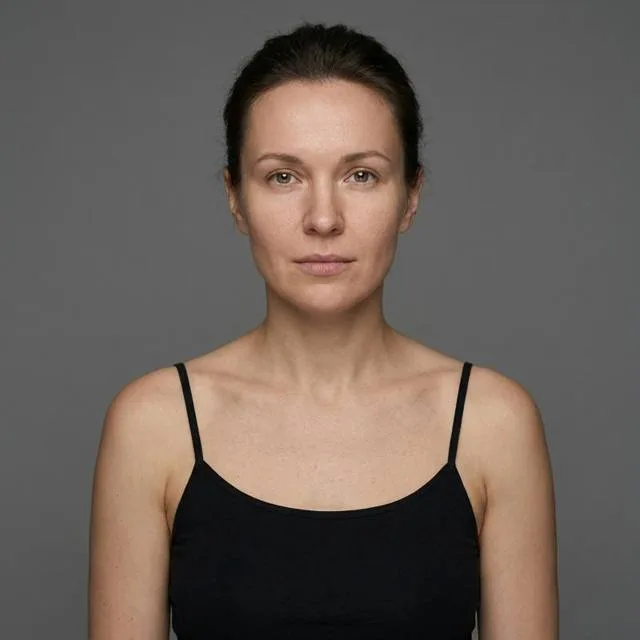
Face lock (identity only)
One canonical reference image on a mid-gray seamless backdrop, soft light from camera-left or camera-right, and a locked neutral baseline wardrobe (plain black camisole or plain black ribbed tank). No outfit styling. No environment. No mood. Identity only. This image anchors every future generation of this character.
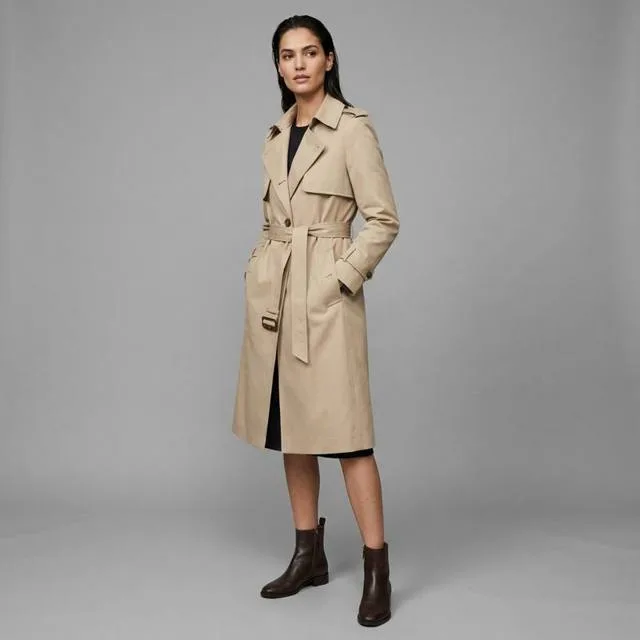
Base outfit reference
Once the face is locked, build a single full styling image on the same mid-gray seamless studio. Two paths: write the full outfit from prompt (best for simpler wardrobe), or build the outfit on a bland fit model first and composite it onto the locked character (best for complex custom wardrobe designed separately from casting).
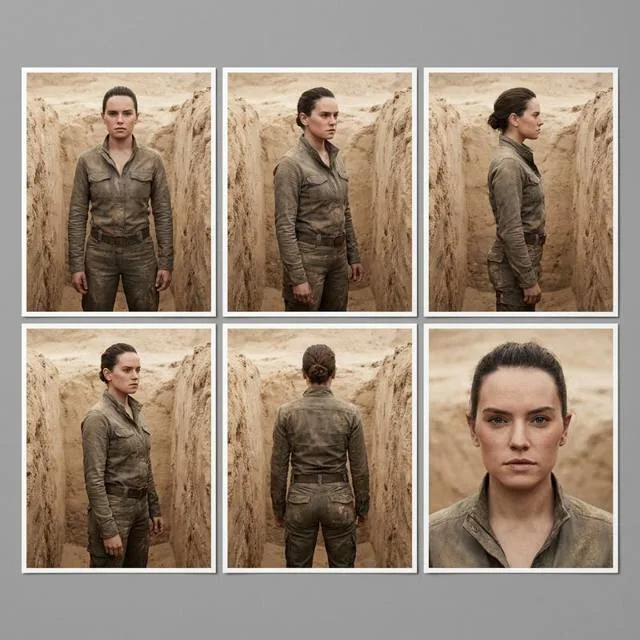
Six-panel character sheet
Only after a base outfit exists: one 16:9 frame, a 3×2 grid. Front body, back body, two side-profile close headshots, one front-face close headshot, one detail shot (nails, jewellery, piercing, held prop). This sheet is what you attach to video prompts.
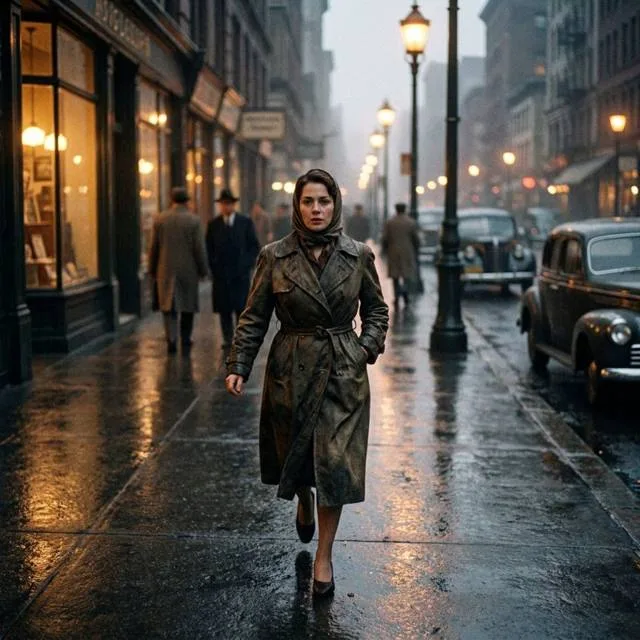
Scene plates
The character finally enters a fully realized cinematic environment. Never build a scene plate before the identity and outfit are locked; you will chase drift forever.